Reaches deep tissue
Focused pulses reach tendons, calcium deposits and trigger points that hands and massage can't.

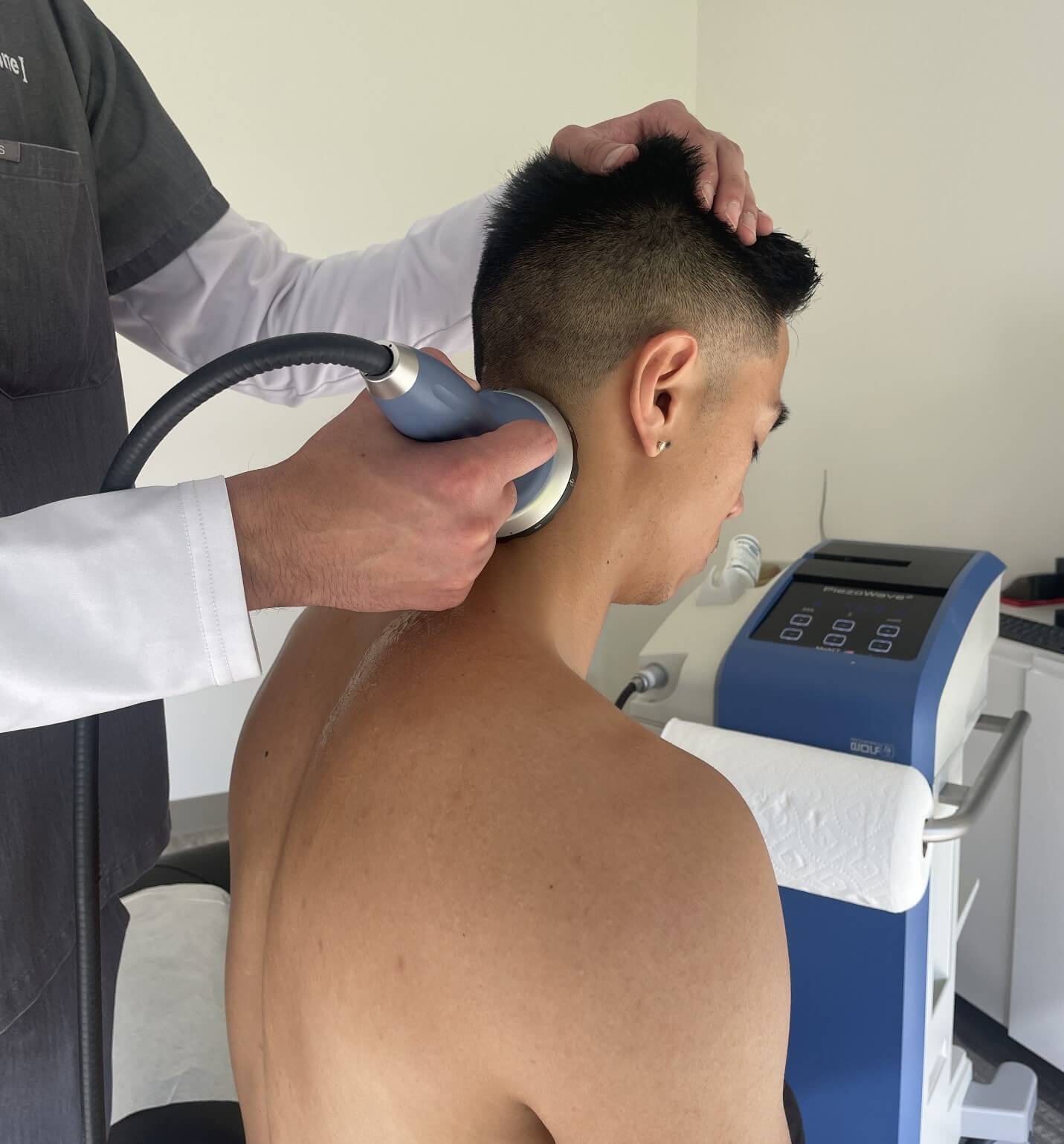
Focused Piezowave® shockwave · North Waterfront, San Francisco
Non-invasive, drug-free focused shockwave therapy for plantar fasciitis, tennis elbow, Achilles and shoulder tendinopathy, and stubborn trigger points. A chiropractor-led program using Piezowave® technology, with no needles and no downtime.
New shockwave patients: first session $49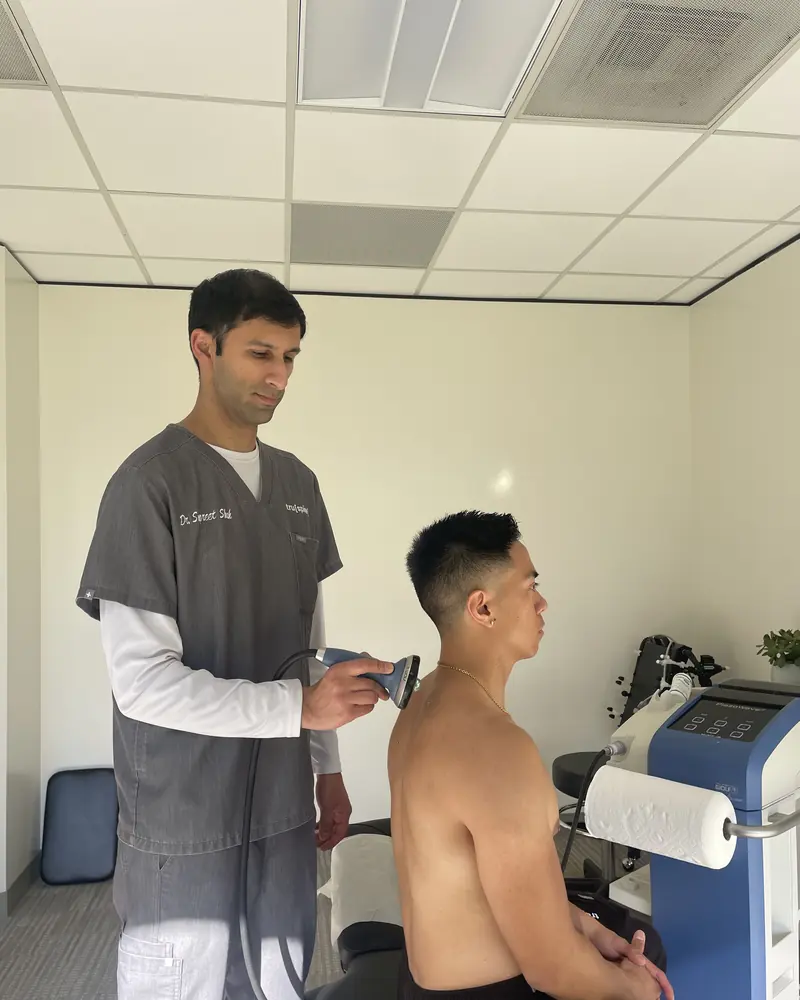
How it works
Shockwave therapy is a non-invasive treatment that sends focused sound-wave pulses into injured tendons, muscles and joints to relieve pain and restart healing. It's also called extracorporeal shockwave therapy (ESWT), acoustic wave therapy or Myofascial Acoustic Compression Therapy (MyACT).
The pulses increase local blood flow, stimulate collagen production, help break down scar tissue and calcium deposits, and calm the nerve endings that keep chronic pain going. It's used in orthopedics, sports medicine and chiropractic for problems that haven't improved with rest, stretching or injections.
At Truspine we use focused Piezowave® shockwave, which concentrates energy at a precise depth. That lets us reach deep tendons and trigger points, and even find where referred pain is coming from, using your feedback as we go.
Why patients choose it
Focused pulses reach tendons, calcium deposits and trigger points that hands and massage can't.
Boosts blood flow and collagen, so the tissue repairs instead of just feeling better for a day.
No needles, no anesthesia, no medication and no downtime. Walk out and get on with your day.
About 7 to 10 minutes per area, easy to fit in before work or at lunch.
A conservative choice to try before injections or surgery for chronic tendon pain.
Piezowave can locate the trigger points behind pain that shows up somewhere else.
Conditions we treat
Shockwave works best for chronic tendon and soft-tissue problems, the kind that keep coming back.
Chronic heel and arch pain, especially first steps in the morning.
Stiff, painful Achilles tendon from running, jumping or tight calves.
Lateral and medial epicondylitis from sport, lifting or keyboard work.
Shoulder pain with or without calcium deposits, and limited overhead reach.
Patellar tendinopathy and pain below the kneecap.
Outer-hip pain and gluteal tendinopathy, often called hip bursitis.
Outer knee and thigh pain in runners and cyclists.
Stubborn pain at the sit bone or along the shin.
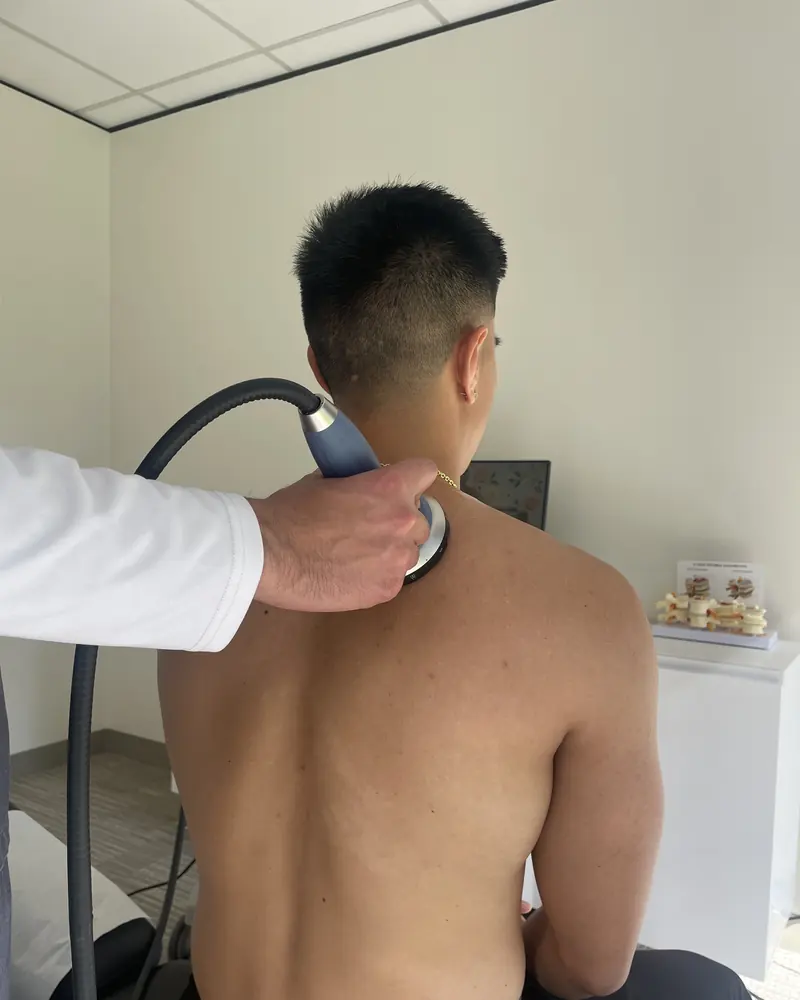
Deep, tight knots that refer pain, including stubborn neck and upper-back tension.
Pain and stiffness around arthritic hips, knees and hands.
Not sure if shockwave is right for you?
Book a visit and we'll examine the area and tell you honestly.
Book an evaluationWhat to expect
We examine the area, find the source of pain and confirm shockwave is a good fit.
A thin layer of gel goes on the skin. We start low and use your feedback to find the tender, familiar ache.
Focused pulses for about 7 to 10 minutes. We adjust the intensity to your comfort the whole time.
No downtime. Mild redness or tenderness for a day or two is normal. Sessions are usually about a week apart.
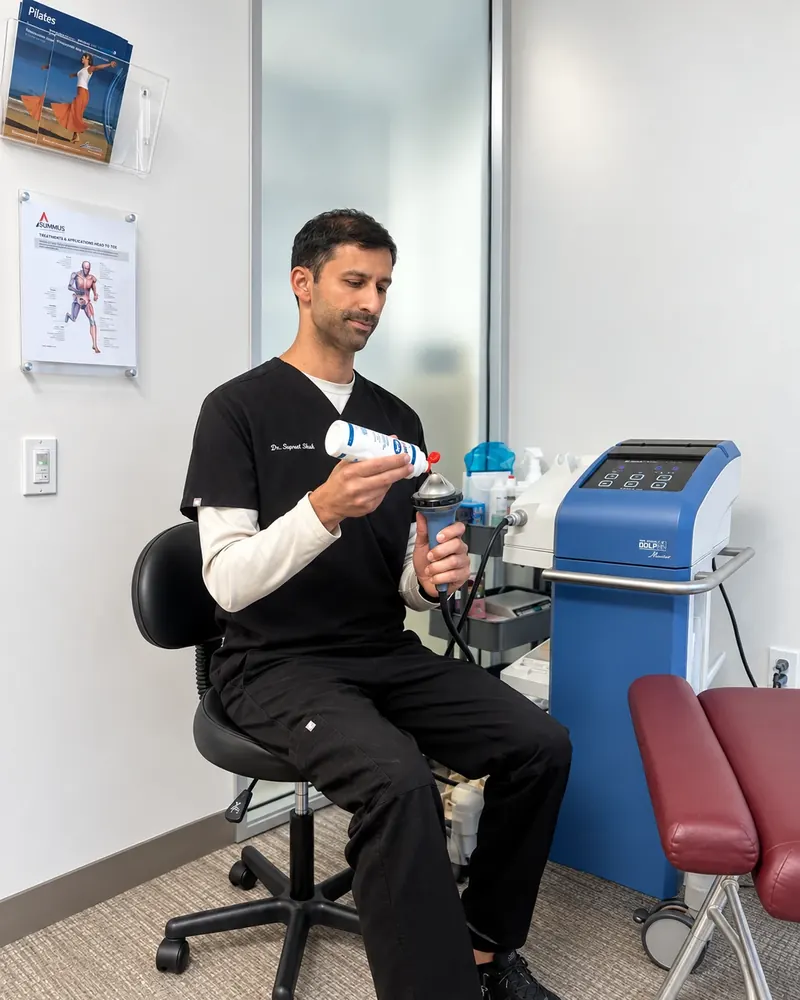
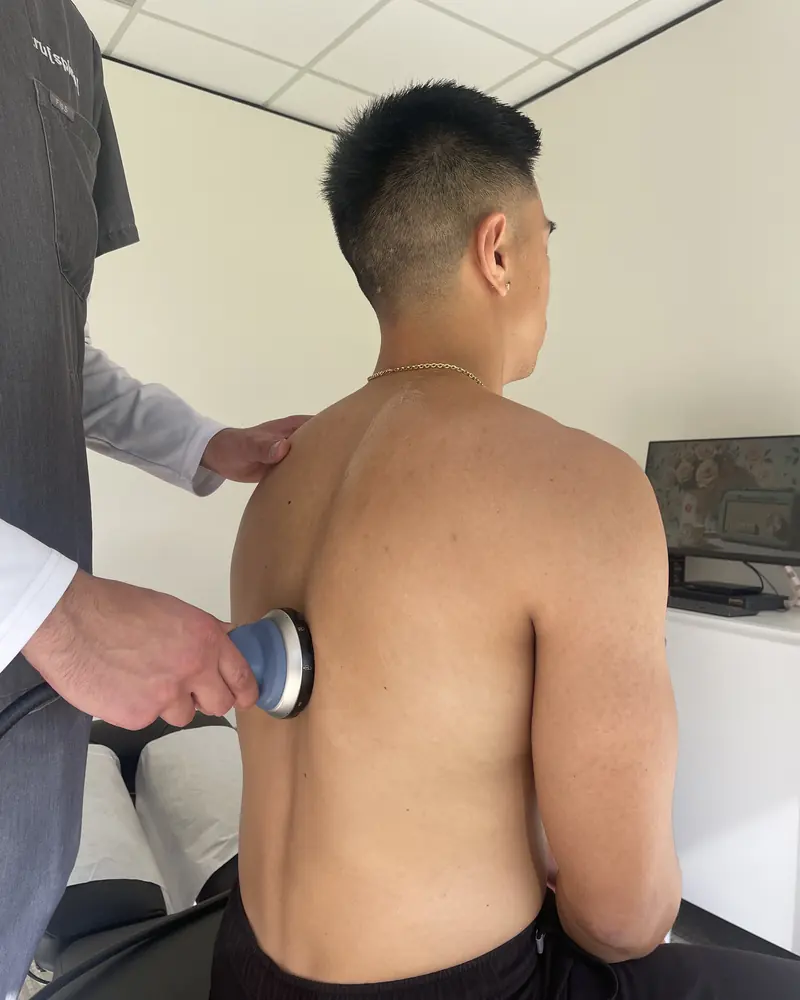
Not all "shockwave" is the same. Here's how focused shockwave compares with the alternatives.
| Focused shockwave (Piezowave®) | Radial shockwave | Cortisone injection | Ultrasound | |
|---|---|---|---|---|
| Depth | Deep and precise | Near the surface | Injected | Shallow heat |
| Stimulates repair | Yes | Some | No, calms inflammation | Limited |
| Needles or drugs | None | None | Needle + steroid | None |
| Best for | Deep tendon pain, calcific deposits, trigger points | Superficial muscle tightness | Short-term pain relief | Mild, superficial strains |
Patient testimonials
Watch a patient describe his shockwave therapy experience at Truspine.
"I can't praise Dr. Supreet Shah and the Truspine clinic enough! I had been suffering from chronic elbow pain for quite some time, and Dr. Supreet's expertise, along with Electric Shockwave Therapy and his other techniques, has worked wonders. The relief I've experienced is nothing short of amazing. Scheduling is very simple and I would highly recommend them to anyone seeking effective pain relief. Five stars all the way!"
"I'm so thankful I found Truspine! They are highly skilled, kind people. I have experienced significant relief and success with the shock wave therapy. I recently tried the chiropractic services for the first time and also benefited, it wasn't scary like I thought it would be. They have great technology to look at your neck and feet alignment. They can scan your neck and feet at the same time and quickly recommend a custom pillow & foot sole support based on your needs. I am excited to try the acupuncture next as they offer dry needling for continued healing support. Highly recommend their services for joint, ligament and spinal issues!"
"I've been coming to Truspine on the weekly for a while now and it's been paying off. So glad they offer Shockwave therapy which my body responds well to especially given that I've been ramping on my fitness journey. The entire team is amazing and Dr. Fein has become a solid component in my self-care routine. Really enjoy our chats while he fixes me up. I always feel instant relief and a dramatic improvement in my mobility post session. They offer other services such as traditional chiropractic, dry needling and more. Highly recommend if you're in need of body work."
Chiropractor-led care
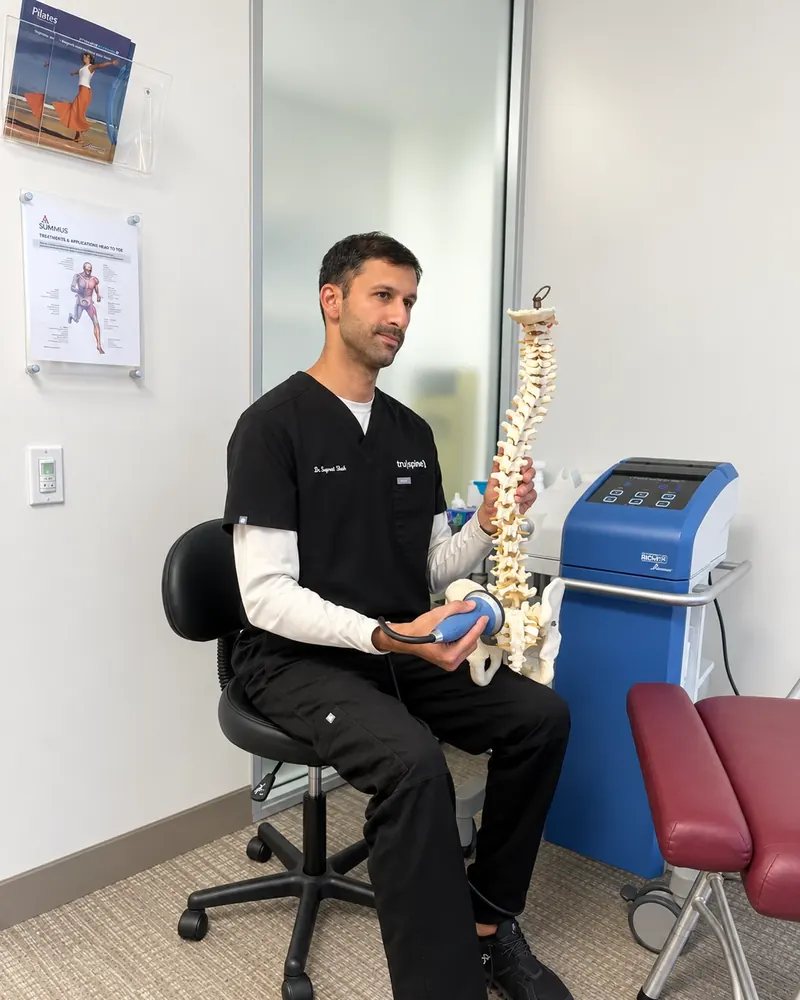
Shockwave therapy at Truspine is part of a care plan designed and overseen by our chiropractic team, led by Dr. Supreet Shah, DC, MS, CCSP, a Certified Chiropractic Sports Physician.
Because the program is chiropractor-led, we also look at why the tendon is overloaded, like joint stiffness, posture, footwear or training load, and treat that too.
Safety
Yes. Side effects are usually mild and short-lived: redness, slight swelling or tenderness at the treatment site for a day or two.
We don't treat over a pregnancy, a tumor, an infection or a pacemaker, and we take extra care with blood thinners, bleeding disorders or a recent steroid injection. We'll review your health history first.
Answers from our San Francisco chiropractors. More reading: shockwave for plantar fasciitis · do I have tennis elbow?
Shockwave therapy (also called extracorporeal shockwave therapy, ESWT, or acoustic wave therapy) is a non-invasive treatment that sends focused sound-wave pulses into injured tendons, muscles and joints. The pulses increase blood flow, help break up scar tissue and calcium deposits, and trigger the body's own repair process. There are no needles, no medication and no downtime.
Truspine offers focused Piezowave® shockwave therapy at 50 Francisco Street, #257 in North Waterfront, near Fisherman's Wharf, Russian Hill, Telegraph Hill and the Financial District. Every shockwave plan is overseen by our chiropractic team, led by Dr. Supreet Shah, DC, MS, CCSP. Book online or call (415) 421-1115.
Focused shockwave concentrates energy at a precise depth, so it can reach deep tendons, calcific deposits and trigger points. Radial shockwave spreads energy near the skin's surface, and many people describe it as feeling like a strong massage gun. Truspine uses focused Piezowave® technology, which lets us target the exact source of pain at the right depth.
Piezowave is a focused shockwave system that uses piezoelectric crystals to create precise acoustic pulses. Because the energy is focused and adjustable, we can treat deep structures, and also use it to locate the trigger points that refer pain elsewhere, guided by your feedback during treatment.
Most patients describe a deep, familiar ache at the sore spot. We start at a low setting and raise it only to a level you're comfortable with, and you can ask us to turn it down at any time. Discomfort usually eases as the session goes on.
The shockwave portion usually takes about 7 to 10 minutes per area. Your visit may also include chiropractic care, soft-tissue work or exercises.
It depends on the condition, how long you've had it and how your body responds. Treatments are usually spaced about a week apart, and long-standing tendon problems typically need a short series. We'll recommend a plan after your evaluation and track your progress at each visit.
New shockwave patients can try their first session for $49. After your evaluation, we'll explain the cost of a full treatment plan before you commit. Call (415) 421-1115 for current pricing.
Many insurance plans don't cover shockwave therapy. Call us and we'll explain your options, including our first-session offer and payment plans.
Shockwave is best known for plantar fasciitis, Achilles tendinopathy, tennis and golfer's elbow, calcific and rotator cuff tendinopathy, jumper's knee, hip and gluteal tendon pain, IT band syndrome, hamstring tendinopathy, shin splints and deep myofascial trigger points.
Yes. Plantar fasciitis is one of the most studied uses of shockwave therapy, especially for heel pain that hasn't improved with stretching, rest or orthotics. We often pair it with custom orthotics and calf and foot exercises. Read how we treat plantar fasciitis with shockwave.
Yes. Focused shockwave is commonly used for calcific rotator cuff tendinopathy. The pulses help break down calcium deposits and calm pain so you can regain range of motion, often without injections or surgery. Learn more about shoulder pain treatment.
It can help when back pain comes from tight, overworked muscles and deep trigger points along the spine and hips. We usually combine it with chiropractic adjustments and exercise. For disc-related pain, spinal decompression may be a better fit. See back pain treatment.
Shockwave may support circulation around irritated nerves and ease related muscle pain, but it isn't a stand-alone neuropathy treatment. For numbness, tingling or burning in the feet, we recommend our full neuropathy treatment program, which can include shockwave as one part.
Yes, when performed by a trained provider. Side effects are usually mild and short-lived: redness, slight swelling, tenderness or a bruise at the treatment site for a day or two.
Shockwave isn't used over a pregnancy, a tumor or an active infection, or over the area of a pacemaker. We also take extra care if you have a bleeding disorder, take blood thinners or recently had a steroid injection in the area. Tell us your health history and we'll confirm you're a good candidate.
Most people go straight back to normal activities. For a couple of days, avoid hard training of the treated area and skip anti-inflammatory medication like ibuprofen if your doctor agrees, since the goal is to let the natural healing response work. Ice is usually not needed.
Cortisone can calm pain quickly but doesn't repair the tendon, and repeated injections can weaken tissue. Shockwave works by stimulating healing, so it's often a good option for chronic tendon pain or for people who want to avoid injections. Your provider can help you weigh the options.
For chronic tendon problems like plantar fasciitis, focused shockwave reaches deeper and is designed to trigger tissue repair. Therapeutic ultrasound works closer to the surface with gentle heat. We use shockwave as the main treatment and ultrasound only when it adds value.
Yes, and most Truspine patients do. Shockwave works well alongside chiropractic adjustments, Graston, Active Release Technique, dry needling and corrective exercise.
New shockwave patients can try a first session for $49 at our North Waterfront clinic. No referral needed.
Individual results vary. Testimonials reflect individual experiences and are not a guarantee of results. Shockwave therapy at Truspine is provided after an evaluation, as part of a care plan directed by a licensed chiropractor. This page is for informational purposes and is not medical advice.