Herniated discs
When disc material pushes out and presses on a nerve. Decompression takes the load off so the nerve can calm down.
Learn more →
Non-surgical · DOC decompression table · North Beach, San Francisco
Non-surgical relief for herniated and bulging discs, sciatica, pinched nerves and spinal stenosis. Our computer-guided DOC table gently takes pressure off the exact disc causing your back or neck pain, as part of a chiropractor-led plan.
Initial appointment: $49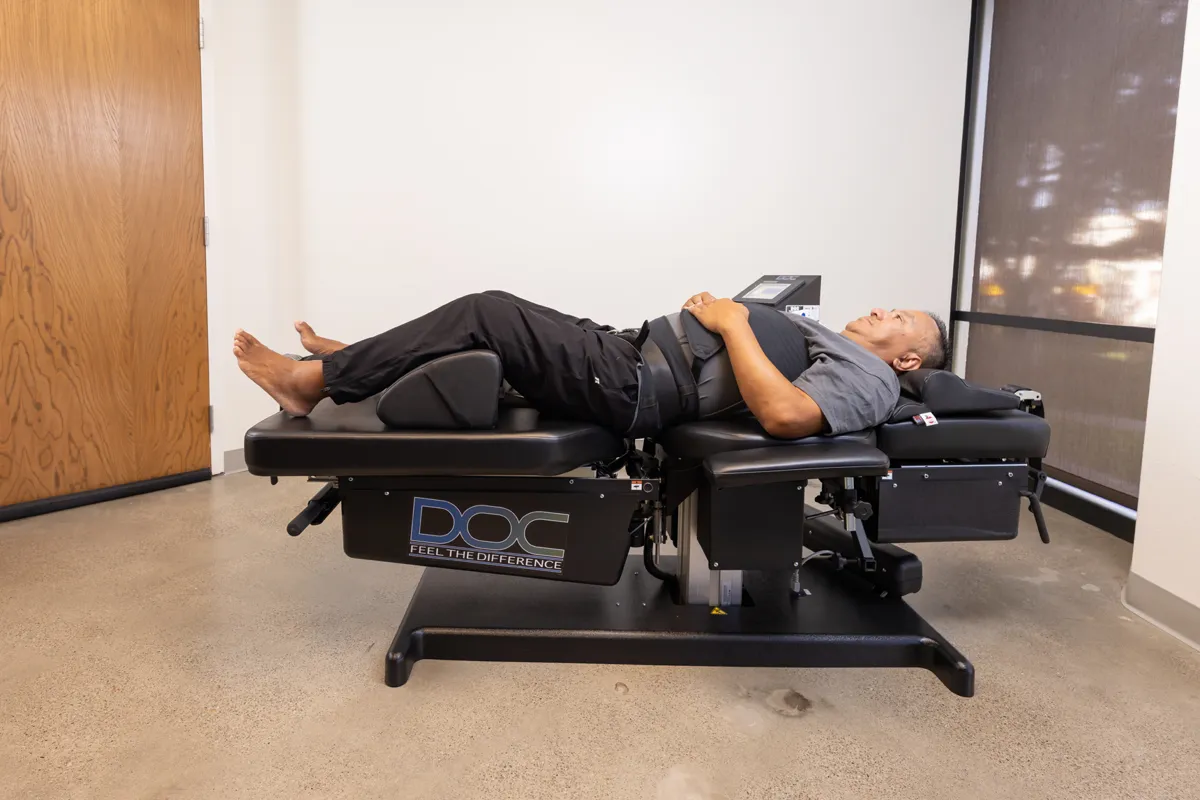
How it works
Spinal decompression therapy is a non-surgical treatment that gently stretches the spine to take pressure off irritated discs and nerves. You lie comfortably on a computer-controlled table while it applies a slow, cycling pull to the area causing your pain.
That stretch creates space between the vertebrae. Even a small increase in space reduces pressure on the nerve, draws water, oxygen and nutrients back into the disc, and gives irritated tissue room to settle and heal.
It is used most often for herniated and bulging discs, sciatica, degenerative disc disease, spinal stenosis and pinched nerves in the lower back and neck, especially when pain has lasted for weeks or months and other care has not resolved it.

Conditions we treat
Decompression works best when pain comes from a compressed disc or an irritated nerve. These are the conditions we treat with it most.
When disc material pushes out and presses on a nerve. Decompression takes the load off so the nerve can calm down.
Learn more →A disc that bulges past its normal edge. Restoring space reduces pressure and pain.
Pain, numbness or tingling from the low back into the hip and leg, often caused by a disc pressing on a nerve root.
Learn more →Discs that have lost height and hydration. Decompression helps draw fluid and nutrients back in.
Narrowing around the nerves that limits walking and standing. Decompression gives the nerves more room.
Pressure on a nerve in the lower back or neck that sends pain into the leg or arm.
Cervical decompression for neck disc problems and pain, numbness or tingling into the shoulder and arm.
Irritated joints at the back of the spine that cause stiffness and localized pain.
Learn more →Ongoing pain after back surgery in non-fusion cases, once you have been cleared.
Is it right for you?
If two or more of these sound like you, it is worth coming in for an evaluation.
After your exam we tell you honestly whether decompression is the right tool for your problem. If it is not, we will say so and recommend what is.
Quick 2 minute quiz
Answer 8 quick questions about your back or neck pain and see if spinal decompression could help you. You'll get your results right away.
Our technology
Few clinics in San Francisco have a DOC table. It is an FDA-cleared, computer-guided decompression system that lets us target the specific level of your spine causing your pain and control exactly how much force is applied and for how long.
That precision matters. The best results come from opening space only where it is needed, by the right amount. Less precise devices, like basic traction or inversion tables, pull on the whole spine and often make the back muscles tense up and resist.
Our chiropractors usually find the exact disc and nerve involved through a hands-on exam. When imaging is needed, we order it or refer you.
Set to the exact lumbar or cervical level causing your symptoms.
Gradual, cycling force that keeps your muscles relaxed while the disc space opens.
Lumbar and cervical decompression on the same table.
Combined with chiropractic care, laser therapy and exercises for lasting results.
What to expect
Your first visit includes a consultation and exam to find the disc and nerve involved and confirm decompression is safe and right for you.
You lie face-up or face-down, fully clothed. A harness is fitted around your pelvis and torso, or a cradle supports your neck.
The table slowly applies and releases a precise stretch for 15 to 30 minutes. Most people relax, and some fall asleep.
We combine decompression with chiropractic care, laser therapy and home exercises, and track your progress along the way.
Free download
Learn how our multi-step program combines spinal decompression, laser therapy, chiropractic care and healing technologies to relieve disc and nerve pain. Fill out the form and we will send the guide to you.

Results
Every spine is different, but this is what our patients usually tell us as they move through treatment.
The research
The best-known study of non-surgical spinal decompression was led by John Leslie, MD, at Mayo Clinic Arizona. Patients with herniated discs, degenerative discs and failed back surgery reported average pain dropping from 6.4 to 0.8 on a 10-point scale, along with better function and less need for pain medication, with no adverse effects reported.
It was a small study, so we use it as a guide, not a guarantee. What matters most is your exam, and we will tell you whether your problem is the kind that tends to respond.
Click below, fill out the short form, and we will email you the research.
Download researchThere is more than one way to treat a disc problem. Here is how the common options compare.
| DOC spinal decompression | Inversion table or home traction | Steroid injections | Surgery | |
|---|---|---|---|---|
| Invasive? | No | No | Needle injection | Yes |
| Targets a specific disc | Yes, computer-guided | No, whole spine | Yes | Yes |
| What it does | Relieves pressure and supports disc healing | Temporary stretch | Reduces inflammation | Removes or fuses tissue |
| Downtime | None | None | A day or two | Weeks to months |
| Supervised by a clinician | Yes, chiropractor-led | No | Yes | Yes |
Get the most from treatment
Safety
For the right candidates, yes. It is non-invasive and low risk, and every patient has a full exam first.
Decompression is not recommended during pregnancy, or for people with spinal fractures, tumors, severe osteoporosis, spinal infections, or spinal fusion hardware or implants. Tell us your full health history so we can make sure it is safe for you.
Straight answers from our San Francisco clinic.
Spinal decompression therapy is a non-surgical treatment for disc and nerve pain in the lower back and neck. You lie on a computer-controlled table that gently stretches the spine in cycles. This creates space between the vertebrae, takes pressure off irritated discs and nerves, and helps fluid and nutrients reach the disc so it can heal.
TruSpine offers non-surgical spinal decompression on a DOC decompression table at 50 Francisco Street, Suite 257, in North Beach / North Waterfront, near Fisherman's Wharf, Russian Hill, the Marina and Telegraph Hill. Book online or call (415) 421-1115.
Your initial appointment at TruSpine is $49. That visit includes a consultation and exam so we can tell you whether decompression is right for you. If it is, we explain your treatment plan and pricing before you commit to anything.
Coverage for decompression varies by plan. We work with many in-network and out-of-network insurance plans, and our team can check your benefits before your visit. Related care, such as chiropractic adjustments, is often covered.
It depends on your condition, how long you have had it, and how your body responds. After your exam we recommend a plan built around your goals, and we re-check your progress along the way so you are never guessing.
No. Most patients find it comfortable and many find it relaxing. You will feel a gentle, gradual stretch. Some people feel mild soreness afterward, similar to after a good stretch, which usually settles quickly.
A decompression session usually takes 15 to 30 minutes on the table. Many visits also include chiropractic care, laser therapy or exercises, so plan a little extra time.
Many patients feel less pressure and tension after the first few sessions. Nerve pain such as sciatica often takes longer to settle, because the nerve needs time to heal once pressure is reduced. We track your progress at every stage.
Yes. Herniated and bulging discs are the main reason people come to us for decompression. Taking pressure off the disc helps relieve the nerve it is pressing on and supports healing. See our disc herniation treatment page.
Yes, when sciatica is caused by a disc or narrowing that presses on a nerve root in the lower back. Decompression creates space around that nerve. Learn more about our sciatica treatment.
It can help many people with stenosis by giving the nerves more room, which may ease leg pain and make it easier to walk and stand. Your exam tells us whether your type of stenosis is a good fit.
Yes. The DOC table treats both the lower back (lumbar) and the neck (cervical). Cervical decompression is used for neck disc problems and pinched nerves that cause pain, numbness or tingling into the shoulder and arm.
No. Traditional traction and inversion tables pull on the whole spine at a fixed force, which can make the back muscles tighten up and resist. A computer-guided table like the DOC applies a precise, cycling force to a targeted level of the spine, which lets the muscles stay relaxed so the disc space can open.
For many people it is a reasonable treatment to try before surgery. It is non-invasive and low risk. It is not right for every case, and if your exam shows you need a surgical opinion, we will tell you and refer you.
Yes, for appropriate candidates it is considered safe and low risk. Every patient has a full exam first so we can rule out conditions where decompression should not be used.
Decompression is not recommended during pregnancy, or for people with spinal fractures, tumors, severe osteoporosis, spinal infections, or spinal fusion hardware or implants. Tell us your full health history so we can confirm it is safe for you.
Not always. A hands-on exam often shows which disc and nerve are involved. If you already have an MRI or X-rays, bring them. If we need imaging, we will order it or refer you.
Drink plenty of water, stay gently active with walking, and avoid heavy lifting, running and twisting for the rest of the day. Keep up with the home exercises we give you, because a stronger core helps your results last.
Book your $49 initial appointment at our North Beach clinic. We will examine your spine and give you a clear answer and plan.
Individual results vary. Spinal decompression is not right for every condition, and an exam is required to confirm you are a candidate. This page is for informational purposes and is not medical advice.