Knee osteoarthritis
Worn cartilage that causes aching, stiffness and swelling, especially after walking or standing.
Learn more →
Non-surgical knee traction with Knee On Trac® · North Beach, San Francisco
Gentle, non-surgical knee traction for arthritis, worn cartilage and stiff, painful knees. Knee On Trac® opens space inside the joint to take pressure off, as part of a chiropractor-led plan to help you walk, climb stairs and stay active again.
How it works
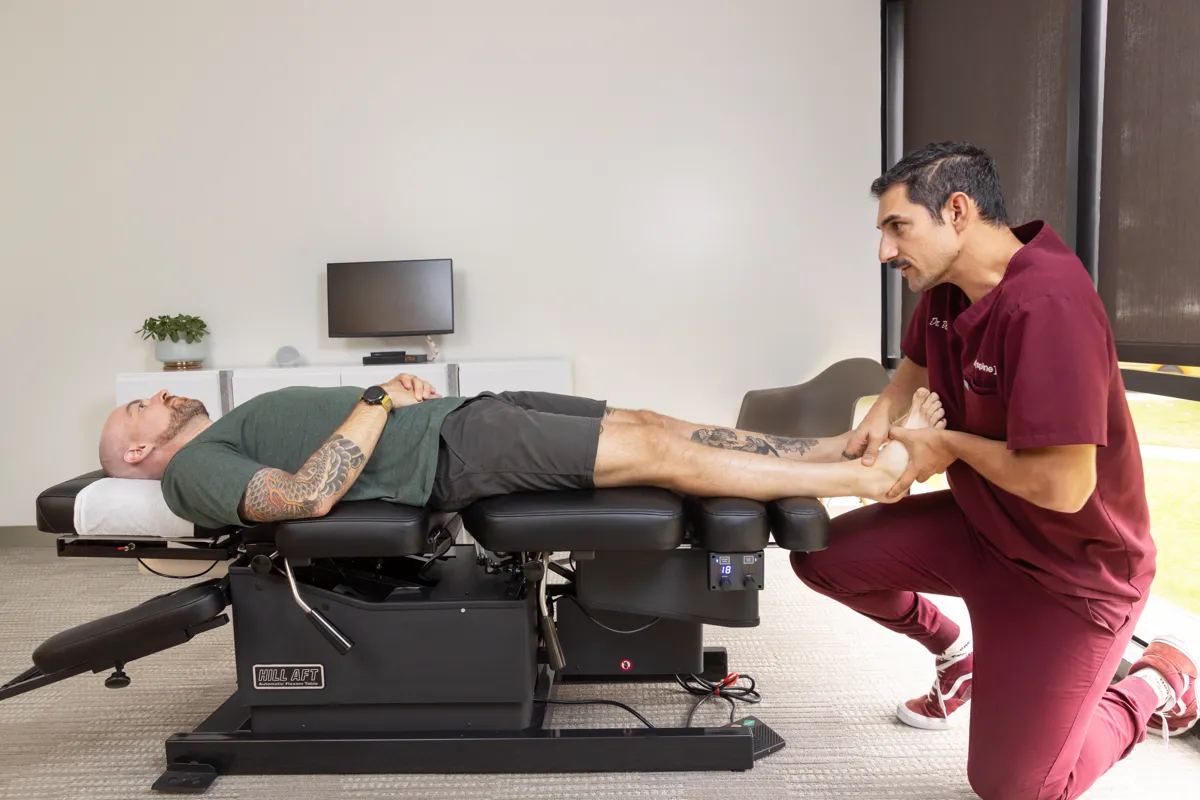
Knee decompression therapy, also called knee traction, is a non-surgical treatment that gently separates the bones of the knee to take pressure off the joint.
When cartilage wears down, the space inside the knee narrows. The thigh bone and shin bone press harder on the cartilage and meniscus, and the joint gets stiff, swollen and sore. A gentle, controlled pull opens that space a little, which eases pressure, helps the joint move more freely and lets fluid and nutrients move back into the cartilage.
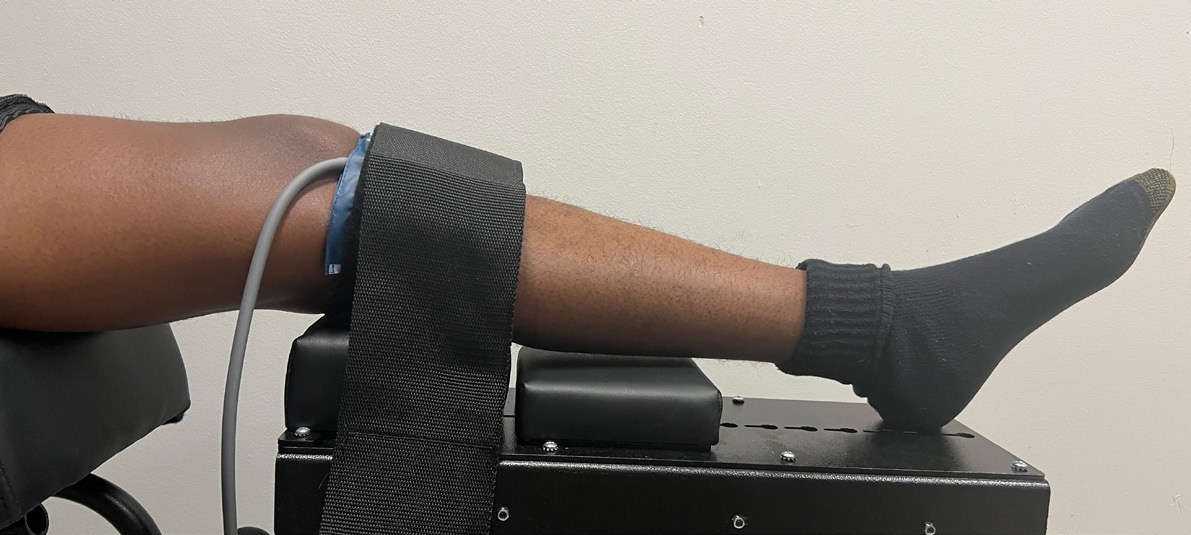
At TruSpine we use Knee On Trac®, an automated knee traction device that isolates the knee, so the stretch goes exactly where it is needed while you sit back and relax.
Who it helps
Knee decompression works best when pain comes from pressure inside the joint. These are the problems we use it for most.
Worn cartilage that causes aching, stiffness and swelling, especially after walking or standing.
Learn more →Joint space narrowing seen on X-ray. Decompression works with the space that is still there.
Pain from a meniscus that has frayed over time, without locking or giving way.
Learn more →Knees that feel tight and puffy and are slow to warm up in the morning.
Aching that flares going down stairs, walking San Francisco hills or getting up from a chair.
A knee that has healed from an injury but never moved freely again, once you are cleared for care.
Is it right for you?
If two or more of these sound like you, it is worth coming in for an evaluation.
After your exam we tell you honestly whether knee decompression is the right tool. If it is not, we will say so and recommend what is.
What to expect
We check your knee, hip, ankle and foot, because the knee often takes the load for joints above and below it. Then we confirm decompression is safe and right for you.
You sit back with your leg supported in the device. There is nothing to undress and no needles.
Knee On Trac® applies a slow, controlled pull to open the knee joint, then releases. A session takes about 15 minutes, and most patients come 2 to 3 times a week.
We pair decompression with soft tissue work and exercises for the hip, thigh and calf so your knee stays supported.
Free download
Learn which knee conditions Knee On Trac® is used for, how sessions work, its benefits and who it is not right for. Fill out the form and we will send the guide to you.
The research
A clinical trial on knee osteoarthritis found that mechanical knee traction followed by therapeutic exercise reduced pain and improved function more than exercise alone.
That is why we never use decompression on its own. It is one part of a plan that also strengthens the muscles that protect your knee.
Safety
For the right candidates, yes. It is non-invasive and low risk, and every patient has a full exam first.
It is not recommended if you have a knee replacement or other hardware in the knee, a recent fracture, an acute ligament tear, a joint infection, a blood clot, a tumor or severe osteoporosis.
There is more than one way to treat an arthritic knee. Here is how the common options compare.
| Knee decompression | Injections | Knee replacement | |
|---|---|---|---|
| Invasive? | No | Needle into the joint | Major surgery |
| What it does | Eases joint pressure and stiffness | Calms inflammation or adds lubrication | Replaces the joint surfaces |
| Downtime | None | A day or two | Months of recovery |
| Builds strength too | Yes, paired with exercise | No | Rehab afterward |
Straight answers from our San Francisco clinic.
Knee decompression therapy, also called knee traction, is a non-surgical treatment that gently separates the bones of the knee joint. Creating that small amount of space takes pressure off the cartilage and meniscus, which can ease pain and stiffness and help fluid and nutrients move back into the joint.
Knee On Trac® is the automated knee traction device we use at TruSpine. It isolates the knee and applies a gentle, controlled pull while you sit back and relax, so the joint can decompress without stressing your hips or back.
TruSpine offers knee decompression with Knee On Trac® at 50 Francisco Street, Suite 257, in North Beach / North Waterfront, near Fisherman's Wharf, Russian Hill, the Marina and Telegraph Hill. Book online or call (415) 421-1115.
Yes. Knee osteoarthritis is the main reason patients come to us for knee decompression. Easing pressure inside the joint can reduce pain and stiffness and make walking and stairs easier, especially when it is combined with strengthening exercises. More on osteoarthritis of the knee.
Many people told their knee is bone on bone still have some joint space left, and that space is what decompression works with. It can help ease pain and stiffness for many of these patients. If your exam suggests your knee needs a surgical opinion, we will tell you and refer you.
It can help pain from a degenerative or worn meniscus by taking pressure off it. A recent tear with locking, catching or a knee that gives way needs an orthopedic assessment first. Read about meniscus injuries.
No. Most people find it comfortable and relaxing. You feel a gentle stretch through the knee. Some people notice mild soreness afterward that settles quickly.
Each Knee On Trac® session takes about 15 minutes. You sit back and relax while the device does the work, so it is easy to fit into a lunch break.
Most patients come 2 to 3 times a week. The total number of visits depends on your knee, how long it has hurt and how you respond. After your exam we recommend a plan built around your goals and check your progress along the way.
Your initial appointment is $49. It includes a consultation and a full knee exam so we can tell you if knee decompression is right for you. We explain your treatment plan and costs before you start, and we work with many in-network and out-of-network insurance plans.
For many people it is a reasonable treatment to try before injections or surgery. It is non-invasive and low risk. It is not right for every knee, and we will tell you honestly if your knee needs a different approach.
Knee decompression is not recommended if you have a knee replacement or other hardware in the knee, a recent fracture, an acute ligament tear, a joint infection, a blood clot, a tumor, or severe osteoporosis. Tell us your full health history so we can confirm it is safe for you.
It works on the same principle, gentle traction that creates space in a joint, but it is designed for the knee. We also offer spinal decompression therapy for disc and nerve pain in the back and neck.
We usually pair it with shockwave therapy, Graston soft tissue work, laser therapy and a home exercise program for the hip, thigh and calf, so your results last.
Not always. A hands-on exam often tells us what is going on. If you already have imaging, bring it. If we need it, we will order it or refer you.
Coverage varies by plan. We work with many in-network and out-of-network insurance plans, and our team can check your benefits before your visit.
It depends on how the pain started. Our guide knee pain doctor: who to see and when walks through your options.
Your $49 initial appointment at our North Beach clinic includes a consultation and exam. We will examine your knee from hip to toe and give you a clear answer and plan.
Individual results vary. Knee decompression is not right for every knee, and an exam is required to confirm you are a candidate. Knee On Trac® is a registered trademark of its owner. This page is for informational purposes and is not medical advice.