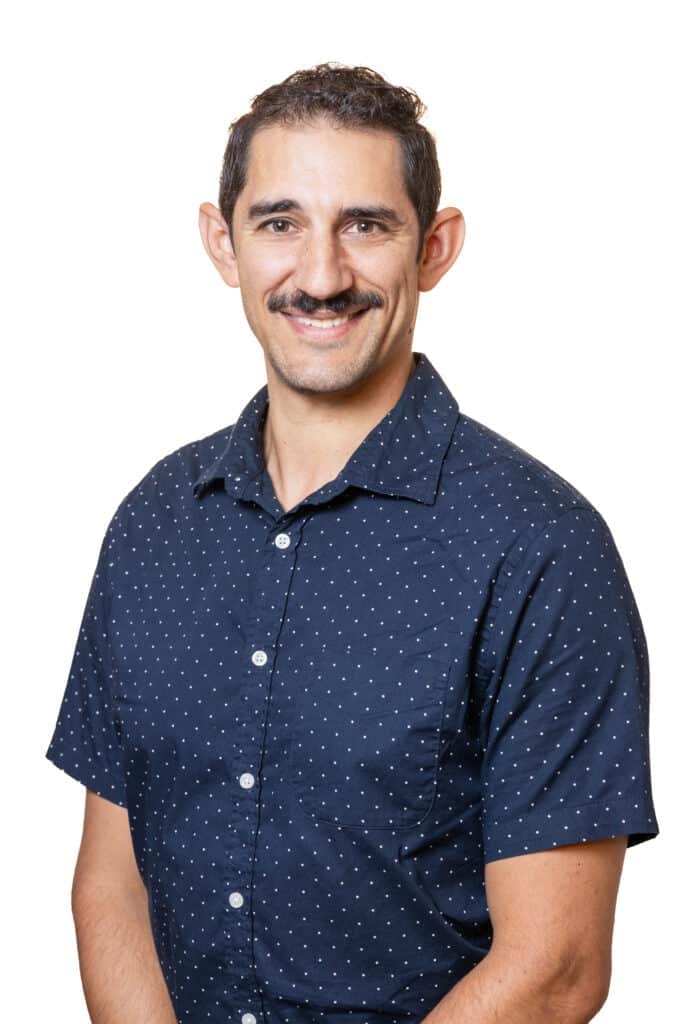
Low back pain
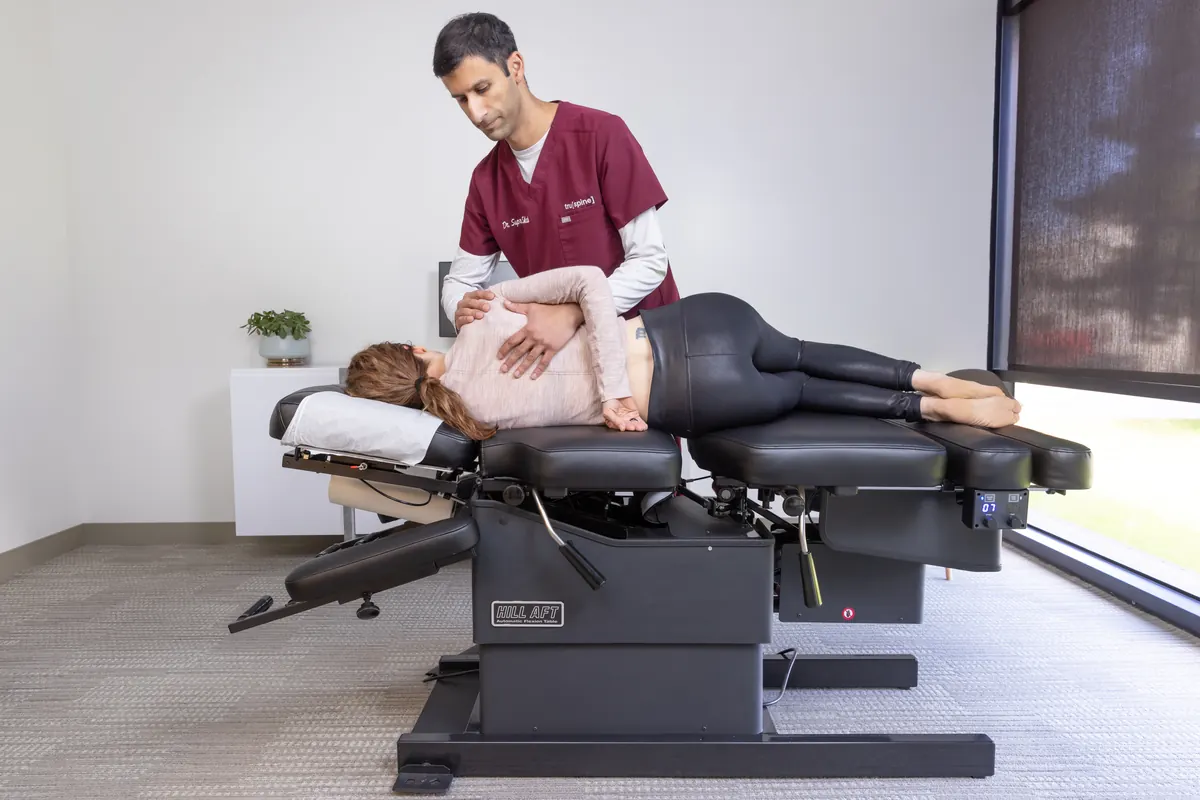
Stiff, achy or acutely "tweaked" low backs, including lifting and deadlift strains.

Licensed chiropractors · North Beach & North Waterfront
Precise, hands-on adjustments for back pain, neck pain, headaches and sports injuries, paired with soft-tissue work and exercise so relief lasts. Gentle options available, no referral needed.
The basics
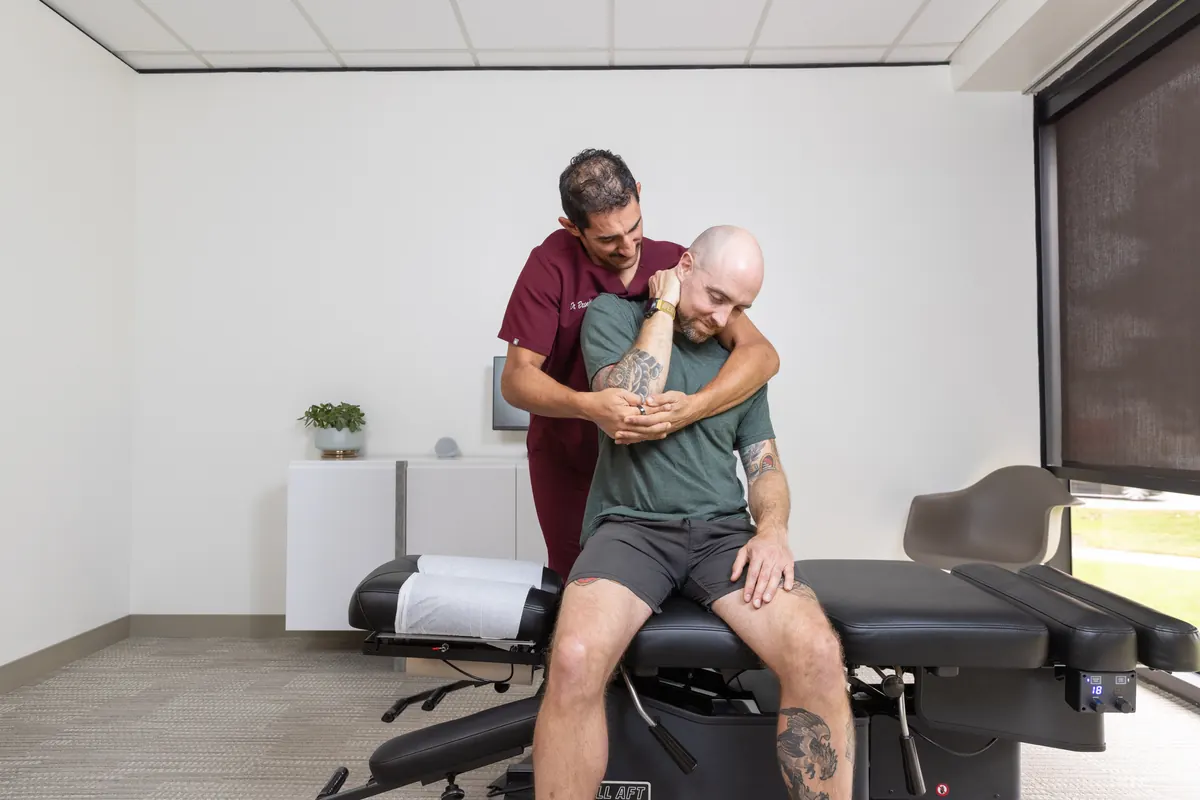
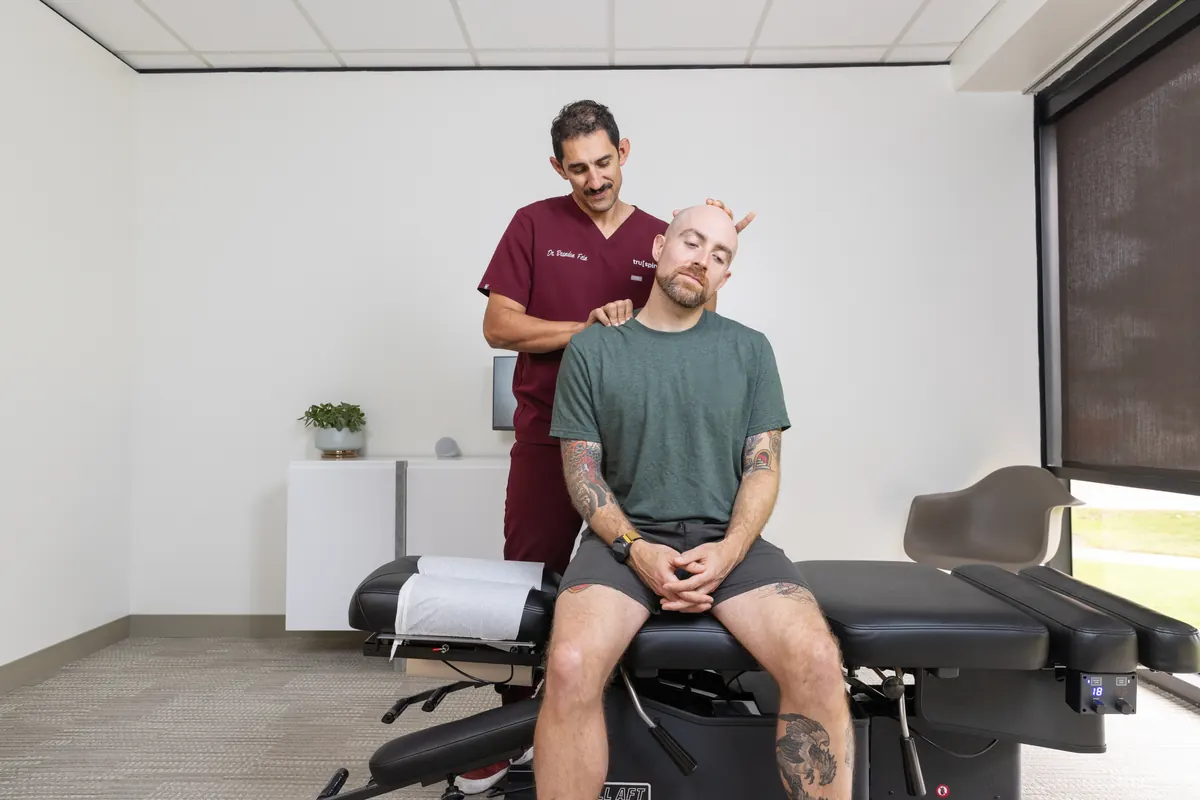
A chiropractic adjustment is a quick, controlled movement that a licensed chiropractor applies to a joint that isn't moving well. Also called spinal manipulation, it restores normal motion, eases pain and muscle guarding, and helps you move more freely.
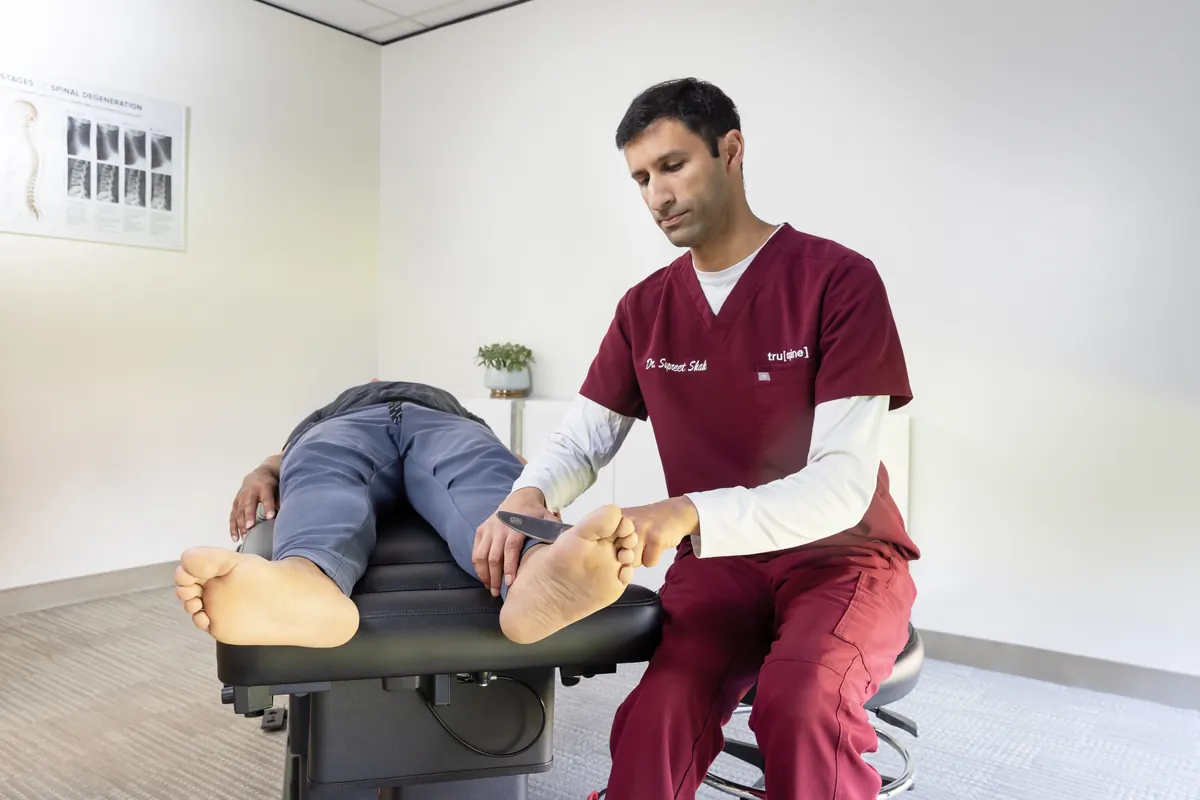
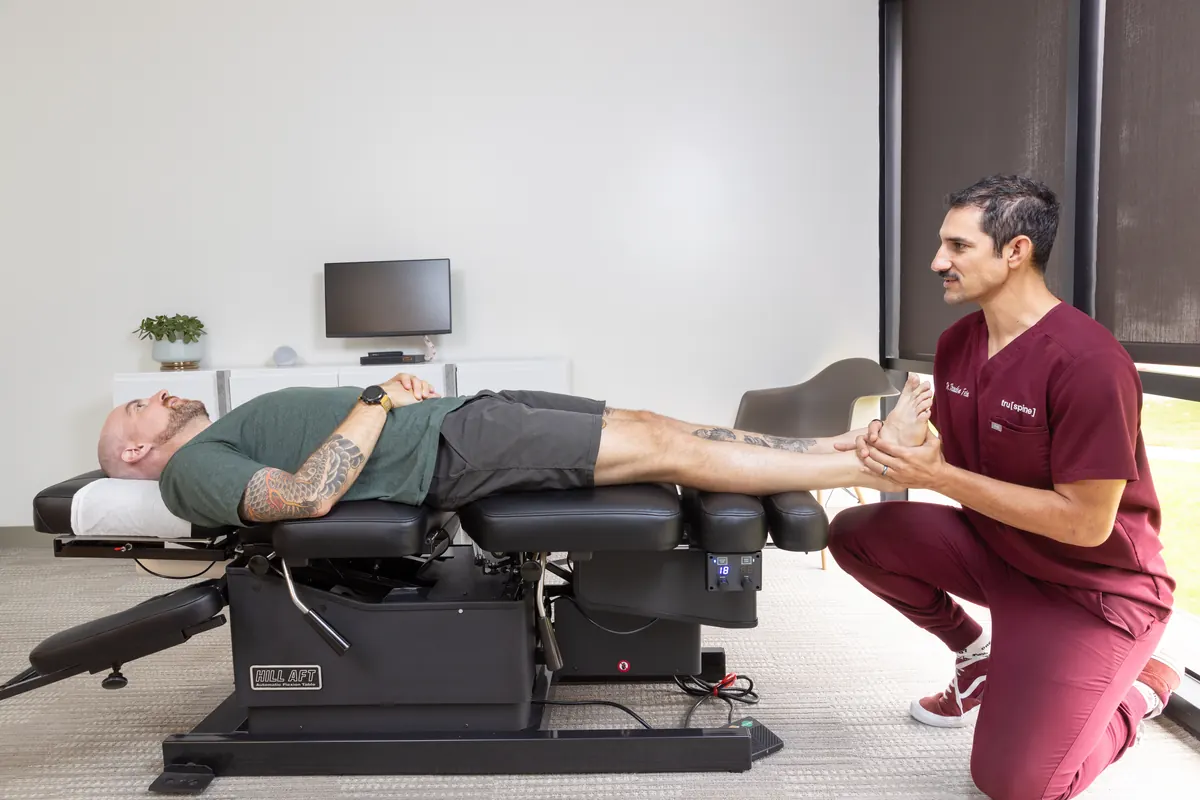
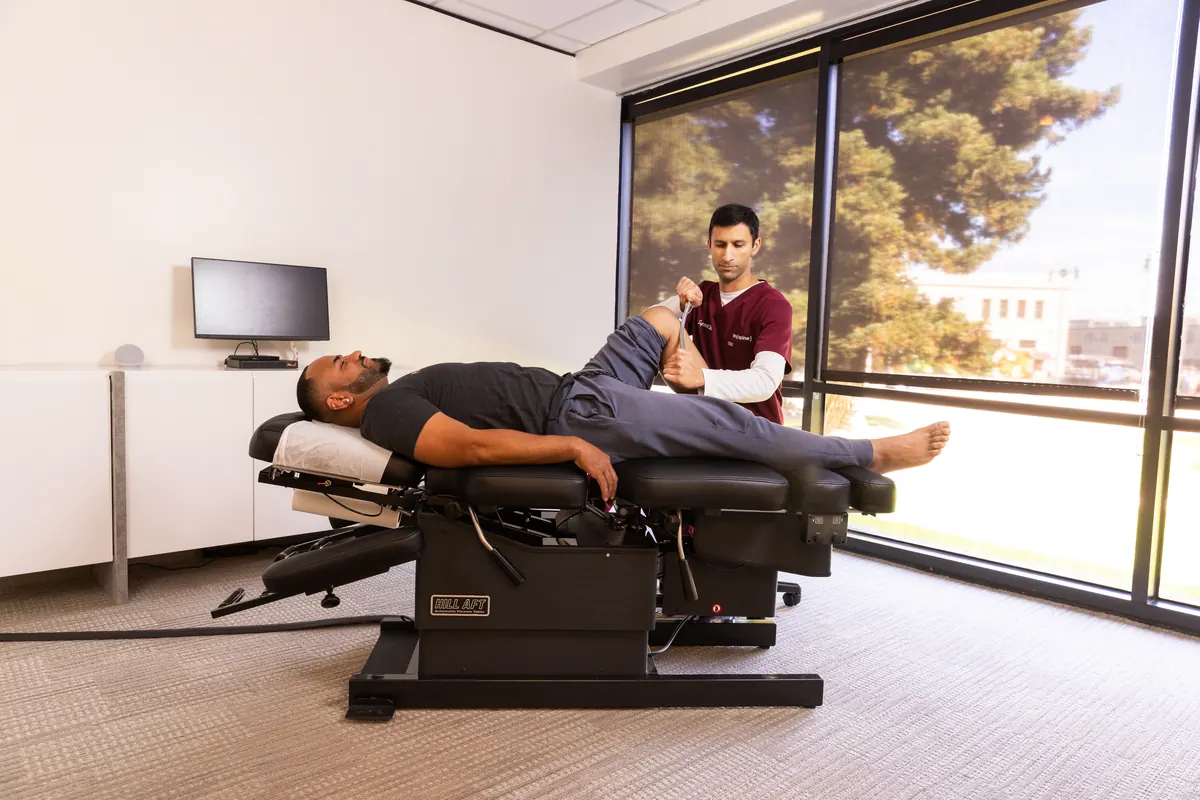
Adjustments can be done by hand, with a drop table or with a handheld instrument, and on more than the spine: we also adjust the shoulders, hips, knees, ankles and wrists. You may hear a pop. That's a harmless release of gas inside the joint, and an adjustment works with or without it.
The American College of Physicians recommends spinal manipulation as one non-drug treatment for low back pain. At TruSpine, every adjustment is part of a plan that also includes soft-tissue work like Active Release Technique and Graston, plus corrective exercise.
Conditions we treat
These are the problems San Franciscans most often bring to our chiropractors.
Stiff, achy or acutely "tweaked" low backs, including lifting and deadlift strains.
Nerve pain into the buttock or leg, often combined with decompression and soft-tissue work.
Desk posture, phone neck and stiffness that limits turning your head.
Headaches that start in the neck and base of the skull.
Gentle, disc-safe techniques, often paired with spinal decompression.
Upper back tightness, rib "catches" and pain with deep breaths.
Extremity adjustments for stiff joints, plus soft-tissue therapy.
Joint restrictions that change how you walk, run and squat.
Faster return to running, lifting, golf and climbing.
Neck and upper-back pain after a collision.
Not sure an adjustment is right for you? Book an exam and we'll tell you honestly.
How we adjust
There's no one-size-fits-all adjustment. We choose the technique that fits your body, your condition and your comfort, and we'll always explain it first.
We also use drop-table adjustments, where a section of the table drops slightly to make the adjustment gentler, and pair care with spinal decompression for disc problems.
What to expect
We talk through your pain, health history, work, training and what you want to get back to.
We test posture, movement, joints, muscles and nerves to find the source, not just the sore spot.
When it's appropriate, you get your first adjustment and soft-tissue work at the first visit.
A clear plan, simple exercises and what to expect next. Mild soreness for a day is normal.
Patient stories
Your chiropractors
Every adjustment at TruSpine is performed by a licensed Doctor of Chiropractic.
All three help with pain. Here's how they differ, and why many TruSpine patients get a blend.
| Chiropractic adjustment | Physical therapy | Massage | |
|---|---|---|---|
| Main focus | Joint motion & alignment | Strength & rehab exercise | Muscle relaxation |
| Hands-on joint work | Yes, core of treatment | Sometimes | No |
| Best for | Stiff, painful joints; back & neck pain; headaches | Post-surgery rehab, weakness | Tension, stress |
| At TruSpine | Adjustments + soft-tissue therapy + corrective exercise in one coordinated plan | ||
Safety
Yes. After a proper exam, adjustments by a licensed chiropractor are a safe, low-risk treatment. The most common side effect is mild soreness or stiffness for a day or two. Serious complications are rare.
Tell us if you have osteoporosis, take blood thinners, have had recent spinal surgery or notice new weakness or numbness. We'll adapt your care, use gentle techniques or refer you for imaging.
Insurance & payment
We work with many in-network and out-of-network plans. Call us and we'll check your benefits before your first visit.
Paying out of pocket? Ask about our payment plans, and see our new patient information.
Straight answers from our San Francisco chiropractors.
A chiropractic adjustment (also called spinal manipulation) is a quick, controlled movement that a licensed chiropractor applies to a joint that isn't moving well. The goal is to restore normal motion, ease pain and muscle tension, and help you move more comfortably. Adjustments can be done by hand, with a drop table or with a handheld instrument, on the spine and on joints like the shoulder, hip, knee and ankle.
TruSpine provides chiropractic adjustments at 50 Francisco Street, Suite 257 in North Beach / North Waterfront, near Fisherman's Wharf, Russian Hill and Telegraph Hill. We're open Monday to Friday, 8am to 6pm. Book online or call (415) 421-1115.
Most people feel pressure and then relief, not pain. If an area is very sore or inflamed, you may feel brief discomfort as the joint moves. We always adapt the technique to your comfort and can use gentle, low-force options.
The pop is called a cavitation: a small gas bubble released from the fluid inside the joint when it opens, the same thing that happens when you crack your knuckles. It isn't bones grinding or "going back into place," and an adjustment can work without any sound.
We start with your history and goals, then examine your posture, movement, joints, muscles and nerves to find the source of your pain. We explain what we find, recommend a plan and, when it's appropriate, begin treatment the same day. If we see red flags, we'll refer you for imaging or to a medical doctor.
The adjustment itself takes only a few minutes. Most TruSpine visits also include soft-tissue work, mobility exercises or other therapies, so you get more than a quick crack.
It depends on your condition, how long you've had it and your goals. Some people feel better after a few visits; others with long-standing problems need a short series and then occasional check-ins. We'll recommend a plan after your exam and adjust it as you improve.
Yes. When performed by a licensed chiropractor after a proper exam, adjustments are considered a safe, low-risk treatment. The most common side effect is mild soreness or stiffness for a day or two, similar to after a workout. Serious complications are rare. Clinical guidelines from the American College of Physicians recommend spinal manipulation as one non-drug option for low back pain.
Adjustments may not be appropriate if you have severe osteoporosis, a spinal fracture, certain cancers, a bleeding disorder or take blood thinners, recent spinal surgery, or signs of nerve damage like progressive weakness or loss of bladder control. Tell us about your health history; we'll modify your care or refer you when needed.
People most often see us for low back pain, sciatica, neck pain, tension and cervicogenic headaches, disc problems, mid-back stiffness, shoulder, hip, knee and ankle pain, sports injuries and whiplash.
Yes. If you prefer not to have a manual "crack," we can use instrument-assisted adjustments, drop-table techniques or gentle mobilization. Just tell your chiropractor what you're comfortable with.
Many headaches start in the neck. For tension and cervicogenic headaches, adjustments to the neck and upper back, combined with soft-tissue work and posture changes, can reduce how often and how strongly they come back.
Often, yes, as part of a plan. We use disc-safe techniques and frequently combine adjustments with spinal decompression and nerve-glide exercises. See our sciatica treatment page for more.
Both treat musculoskeletal pain. Chiropractors specialize in hands-on joint adjustments of the spine and extremities, while physical therapists focus mainly on exercise-based rehab. At TruSpine, your plan combines adjustments with soft-tissue therapy and corrective exercises, so you get both.
Not usually. Most people can be safely evaluated with a hands-on exam. If your history or exam suggests something more serious, we'll refer you for X-rays or an MRI before treatment.
No referral is needed. We work with many in-network and out-of-network plans. Call us and we'll check your benefits before your first visit. Payment plans are available too.
Wear comfortable clothes you can move in. Afterward, stay gently active, drink water and follow the exercises we give you. Mild soreness for a day or two is normal; ice or heat can help.
Book a chiropractic adjustment in San Francisco. Your first visit includes a full exam and, when appropriate, same-day treatment.
Individual results vary. Chiropractic care at TruSpine is provided by licensed Doctors of Chiropractic after an exam. This page is for informational purposes and is not medical advice.