Quick answer
Should you see a chiropractor or physical therapist first?
If your pain comes with stiffness or joints that feel stuck, we suggest starting with a chiropractor. A chiropractor focuses on how your joints move. A physical therapist focuses on exercise, strength and how you move. At Truspine, we get the joints moving first, then add stretching and strengthening. Many people do well with both.
- Get examined. Find out which joints are not moving well and rule out anything serious.
- Get the joints moving. Adjustments can help restore motion where a joint is stuck.
- Then stretch and strengthen. Exercise helps you keep the motion you gain.
Side by side
Chiropractor vs. physical therapist: key differences
Both are licensed health care providers who help people move better and hurt less. The main difference is where they start.
| Chiropractor | Physical therapist | |
|---|---|---|
| Main focus | How your spine and other joints move | Strength, flexibility and how you move |
| Common care | Adjustments, soft tissue work and advice for home | Guided exercise, stretching, hands on work and balance training |
| Degree | Doctor of Chiropractic (DC) | Usually Doctor of Physical Therapy (DPT) |
| Often chosen for | Stiffness, neck and back pain, headaches with neck tension | Rehab after surgery or injury, weakness and balance problems |
| Referral in California | Not needed | Usually not needed, though limits can apply |
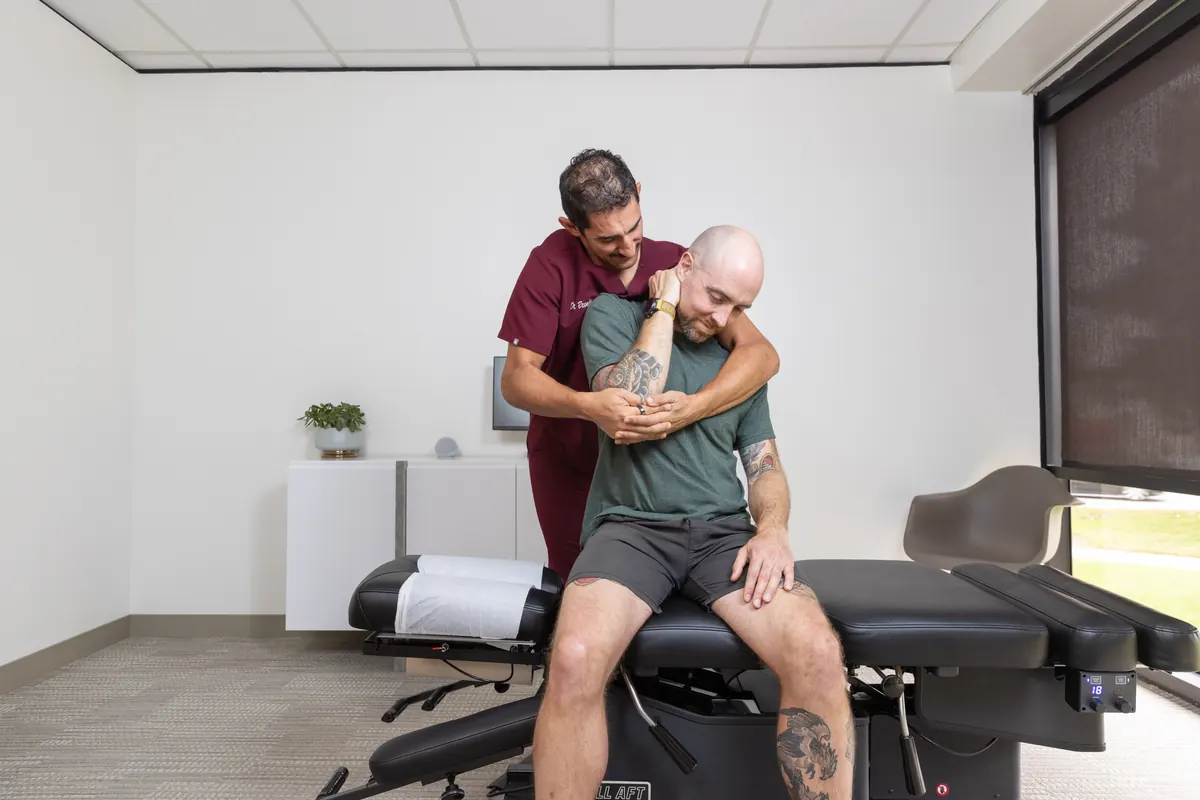
What does a chiropractor do?
A chiropractor checks how your spine and other joints are moving. Your visit starts with an exam to find joints that are stuck or stiff. Care often includes gentle adjustments to help those joints move again, work on the muscles around them, and simple advice for home.
What does a physical therapist do?
A physical therapist teaches exercises and stretches to build strength and improve how you move. Many people see a physical therapist after a surgery or an injury. This work can be very helpful, and we believe it goes best when the joints involved can move freely.
Our approach
Why we start with joint motion
Think about a door with a rusty hinge. You can paint the door or pull harder on the handle, but it will keep sticking until the hinge moves.
Your joints work in a similar way. When a joint is stuck, the muscles around it often tighten up to protect it. Stretching those muscles may feel good for a while, but the tightness tends to come right back. Exercise can also be harder, and sometimes more painful, when a joint is not moving well.
That is why we get the joint moving first. It gives your muscles a better chance to loosen up and get stronger.
Signs your joints may be part of the problem
- Your neck or back feels stiff when you first wake up
- It is hard to turn your head all the way
- You stretch, only to have the tightness come right back
- You have tried exercises and still have the same pain
- You often feel the need to crack or pop your neck or back
- Exercise sometimes makes your pain flare up
Sound familiar? Take our chiropractor vs. physical therapy quiz to see how much stiff joints may be affecting you.
By symptom
Where to start for common problems
Neck pain
Long hours at a desk or looking at a phone can leave the joints in your neck stiff. An exam can show which joints are not moving well, so you know what to work on first.
Low back pain
Back pain often comes with stiffness when you sit, bend or twist. Getting the joints in your back moving can make it easier to stay active and do your exercises.
Sciatica
Pain that travels down your leg can have more than one cause, so an exam comes first. From there, we can talk about the care that makes the most sense for you.
Headaches with a tight neck
Some headaches go along with stiffness and tension in the neck. If that sounds like you, it is worth having your neck checked.
After surgery
Follow your surgeon’s plan. Physical therapy is often the right first step after an operation. Ask your surgeon when other care is safe to add.
The evidence
What the research says
Studies that compare the two do not show that one is clearly better for everyone. Here is what some of the best known research found:
- Low back pain. In a study of 321 adults, chiropractic care and physical therapy had similar results and similar costs. About 75 percent of people in both groups rated their care as very good or excellent.
- Neck pain. A 2013 review found little difference between manipulation or mobilization and physical therapy or exercise.
- Medical guidelines. The American College of Physicians lists spinal manipulation as an option for short term low back pain, and exercise as a first option for long lasting low back pain.
- Safety and benefit. A review in JAMA found modest improvements in pain and function for short term low back pain. None of the trials reported a serious problem. Minor soreness or stiffness was common and did not last.
What this means for you: research supports both types of care, but it has not settled which should come first. Our advice to start with joint motion comes from how we care for patients every day.
Better together
Can you see both a chiropractor and a physical therapist?
Yes. Chiropractic care and physical therapy can work well together. Many people do best when they get their joints moving first, then build strength with exercise. If you are already doing physical therapy, chiropractic care can work alongside it.
At Truspine, chiropractic care can also be combined with acupuncture, shockwave or cold laser therapy.
At Truspine
What to expect at your first visit
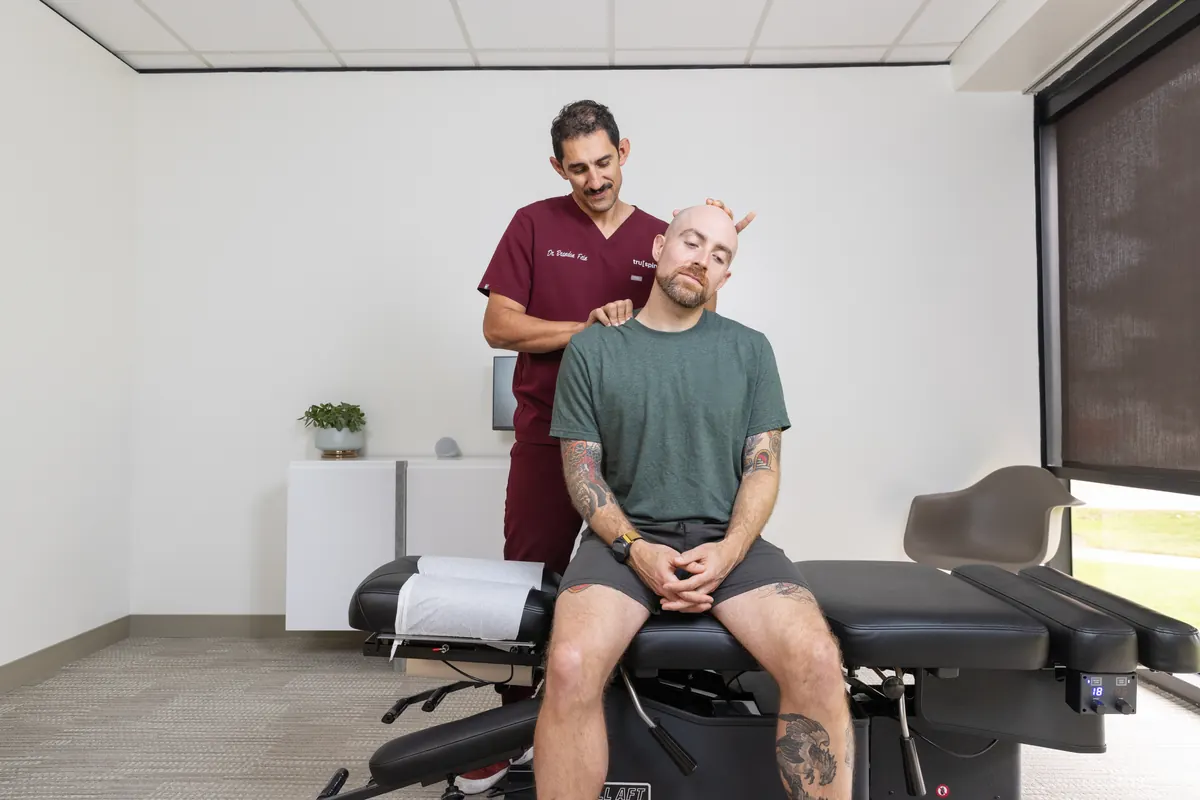
- We listen. Tell us what hurts, when it started and what you have already tried.
- We examine you. We check how your joints move and make sure care is right for you.
- We explain the plan. You will know what we found, what we suggest and how we will track your progress.
- You get moving. Your plan may include adjustments, soft tissue work and simple exercises for home.
San Francisco
Chiropractic care in San Francisco
Truspine is at 50 Francisco St, Suite 257, in San Francisco. No referral is needed. Call us at (415) 421-1115 or book online.
Safety first
When to get medical care right away
Call your doctor or go to the emergency room if your pain comes with loss of bladder or bowel control, new weakness in a leg, a fever, or a recent bad fall or accident.
Quiz
Find out where to start
Answer 12 quick yes or no questions to see how much stiff joints may be affecting you. It takes about 2 minutes.
Ready now? Book your chiropractic visit or call us at (415) 421-1115.
FAQs
Common questions about chiropractors and physical therapists
Should I see a chiropractor or physical therapist first?
If your pain comes with stiffness or joints that feel stuck, we suggest starting with a chiropractor. Getting the joints moving first can make stretching and exercise easier. If you just had surgery, follow your surgeon’s plan.
What is the difference between a chiropractor and a physical therapist?
A chiropractor focuses on how your spine and other joints move, often using adjustments. A physical therapist focuses on strength, flexibility and how you move, often using guided exercise.
Is a chiropractor or physical therapist better for lower back pain?
Research has not shown that one is clearly better for everyone. In one large study, chiropractic care and physical therapy had similar results and costs. Many people start with whichever fits their symptoms, and some use both.
Is a chiropractor or physical therapist better for neck pain?
A 2013 review found little difference between the two approaches for neck pain. If your neck is stiff and hard to turn, a chiropractic exam can show which joints are not moving well.
Can I see a chiropractor and a physical therapist at the same time?
Yes. Many people do. Chiropractic care can help your joints move, and physical therapy can help you build strength. Let both providers know about your care so they can work together.
Can a chiropractor replace physical therapy?
Sometimes, but not always. Chiropractors often teach stretches and exercises. If you need longer rehab after a surgery or a serious injury, a physical therapist may be an important part of your care.
Do I need a referral to see a chiropractor in San Francisco?
No. You do not need a referral to visit Truspine. Some insurance plans have their own rules, so check your plan if you plan to use insurance.
Is chiropractic care safe?
Reviews of the research report that minor effects such as soreness, stiffness or a headache are common and short lived. Serious problems are rare. Your visit starts with an exam to make sure care is right for you.
How many chiropractic visits will I need?
It depends on your problem, how long you have had it and how you respond. After your exam, your chiropractor will explain the plan and how you will both track your progress.
Sources
- Cherkin DC, et al. A comparison of physical therapy, chiropractic manipulation, and provision of an educational booklet for the treatment of patients with low back pain. New England Journal of Medicine. 1998.
- Qaseem A, et al. Noninvasive treatments for acute, subacute, and chronic low back pain: a clinical practice guideline from the American College of Physicians. Annals of Internal Medicine. 2017.
- Paige NM, et al. Association of spinal manipulative therapy with clinical benefit and harm for acute low back pain. JAMA. 2017.
- The outcomes of manipulation or mobilization therapy compared with physical therapy or exercise for neck pain: a systematic review. Evidence Based Spine Care Journal. 2013.
Medically reviewed by Dr. Supreet Shah, DC, MS, CCSP, chiropractor and founder of TruSpine San Francisco.
This article is for general information and is not medical advice. Individual results vary. If you have new or worsening symptoms, get a professional evaluation.