Quick answer
Can acupuncture help tinnitus?
It may help some people. Studies have reported lower tinnitus loudness and distress scores after acupuncture, and it is generally safe. It is not a cure, results vary, and no one can promise you a specific result. Here is what to know:
- Get checked first. Have your hearing tested and treatable causes ruled out.
- Know what to expect. Studies report less bother and lower loudness scores for some people, and results vary.
- Give it a fair trial. Studies most often used 10 to 19 sessions over three to six weeks.
- Use it alongside your other care. Acupuncture does not replace hearing care or cognitive behavioral therapy.
- Expect management, not a cure. The goal is a quieter, less intrusive sound and better sleep and focus.
Do not wait if your tinnitus came with sudden hearing loss, facial weakness or vertigo, or after a head injury. Get emergency care.
The basics
What is tinnitus?
Tinnitus is hearing a sound when there is no sound around you. Most people call it ringing in the ears, but it can also be buzzing, hissing, humming, roaring or clicking. You might hear it in one ear, both ears or inside your head. It can be constant, or it can come and go.
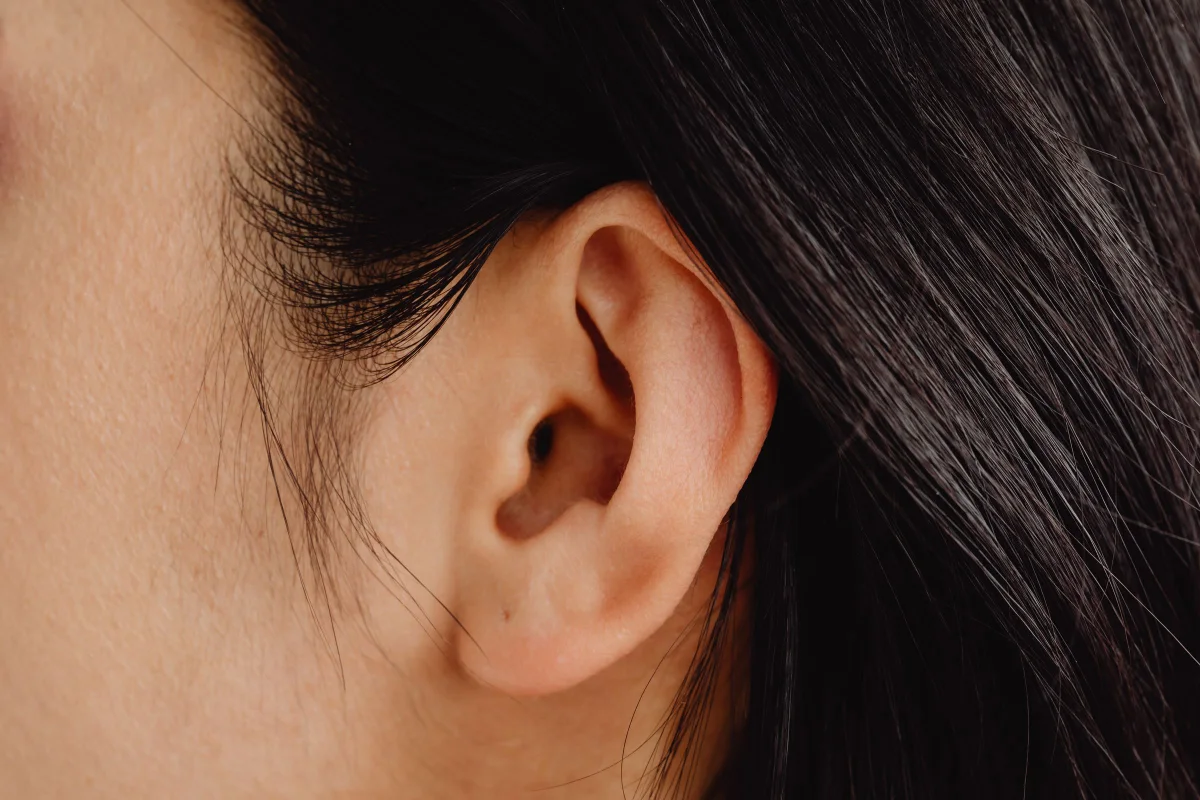
It is common. The 2026 US clinical guideline estimates that 10 to 15% of adults have it, or more than 50 million people in the United States. For many, it is a mild background noise. For others, it gets in the way of sleep, concentration and mood.
Tinnitus is a symptom, not a disease. It is also only rarely tied to a serious medical problem, which is reassuring, but it is still worth having it checked.
Types of tinnitus
Subjective tinnitus
The most common type. Only you can hear it.
Objective tinnitus
Rare. A clinician can sometimes hear it too, often because of blood flow or muscle movement near the ear.
Pulsatile tinnitus
A sound that beats in time with your pulse. This needs medical review.
Somatic tinnitus
The sound changes when you move your jaw, head or neck, or press on nearby muscles.
Why it happens
What causes tinnitus?
Often there is more than one factor, and some people develop tinnitus for no known reason. According to the National Institutes of Health, common causes and links include:
- Loud noise. Concerts, power tools, headphones or a noisy job.
- Hearing loss. This includes the gradual hearing loss that comes with age.
- Earwax or an ear infection. These are often treatable.
- Medications. Tinnitus can be a side effect of some drugs. Do not stop a medication without asking your prescriber.
- Head or neck injury. An injury can affect the ear, the nerves or the muscles nearby.
- Jaw joint problems. TMJ disorders are a known link.
- Less common causes. These include Meniere’s disease, blood vessel problems, tumors and chronic conditions such as diabetes.
Stress does not appear on every list of causes, but many people notice their tinnitus more when they are tired or anxious. Poor sleep makes it harder to ignore the sound, and the sound makes it harder to sleep.
Safety first
When to get your tinnitus checked
Start with your primary care doctor, an ENT or an audiologist. The 2026 guideline says people with tinnitus should have a comprehensive hearing evaluation. See someone soon if your tinnitus is regular or constant, is getting worse, or is affecting your sleep, concentration or mood.
Get emergency care if tinnitus follows a head injury, or comes with sudden hearing loss, facial weakness or vertigo. Ask for an urgent appointment if the sound beats in time with your pulse.
If tinnitus is affecting your mood, tell someone. It can be exhausting, and the guideline asks clinicians to check on this directly. If you ever have thoughts of harming yourself, call or text 988 at any time.
Standard care
How is tinnitus treated?
There is currently no cure for long-lasting tinnitus, so treatment aims to find anything fixable and make the sound less intrusive. The American Academy of Otolaryngology updated its guideline in October 2026. For tinnitus that is persistent and bothersome, here is what it says:
Recommended
A full hearing evaluation, education about tinnitus, a hearing aid evaluation if you have hearing difficulties, cognitive behavioral therapy (CBT), and a cochlear implant evaluation for people who qualify.
Options
Sound enrichment, bimodal neuromodulation, and asking about symptoms linked to the head, neck or jaw.
Not recommended
Routine use of medications such as antidepressants, dietary supplements, or repetitive transcranial magnetic stimulation.
We see acupuncture as something to add to your care if you want to try it, not a replacement for a hearing test or CBT.
What you can do at home
- Add quiet background sound. A fan, soft music or a white noise machine can make tinnitus less noticeable, especially at bedtime.
- Protect your hearing. Use earplugs at concerts and around loud tools, and turn your headphones down.
- Look after your sleep. Keep a regular bedtime and a wind-down routine.
- Manage stress. Try whatever genuinely settles you, such as walking, breathing exercises or acupuncture for stress.

The evidence
What does the research say about acupuncture for tinnitus?
Researchers have been studying acupuncture for tinnitus for years, and the work is ongoing. Here are some of the published findings.
2023 review of 34 trials
Who: 3,086 patients with primary tinnitus.
Found: Acupuncture and moxibustion lowered tinnitus handicap scores more than comparison treatments, with a good safety profile.
2025 trial in Hong Kong
Who: 90 adults aged 50 to 70 who had tinnitus for up to 2 years.
Found: After 10 electroacupuncture sessions over 5 weeks, loudness ratings fell about 2 points more on a rating scale than in the waitlist group. The difference held at week 10, with no serious side effects.
2016 trial in Brazil
Who: 50 people randomized.
Found: After 10 sessions of scalp acupuncture with electrical stimulation, the treated group’s median tinnitus handicap score fell from 56 to 28.
A 2016 review concluded that acupuncture “may offer subjective benefit to some tinnitus patients.” A 2024 review of 106 studies mapped how acupuncture for tinnitus is usually done, including which points are used and how many sessions are common.
Our take: Acupuncture is a low-risk option to consider alongside your medical care. Results vary from study to study and from person to person, and we cannot predict who will respond. For some people, the benefit may be a quieter sound, less distress, better sleep or feeling more relaxed.
Traditional view
How Chinese medicine looks at tinnitus
In traditional Chinese medicine, tinnitus is not treated as one condition. Practitioners look at the whole pattern, including whether the sound is high or low, sudden or gradual, and how it relates to your sleep, stress, digestion and energy. Sudden, loud ringing that gets worse with stress is often linked to the Liver, and a quiet, gradual ringing that comes with fatigue or age is often linked to the Kidney.
These are traditional concepts used to guide treatment, not medical diagnoses. Researchers are still studying how acupuncture might affect tinnitus, and no single explanation has been proven.
At TruSpine
What to expect from acupuncture for tinnitus
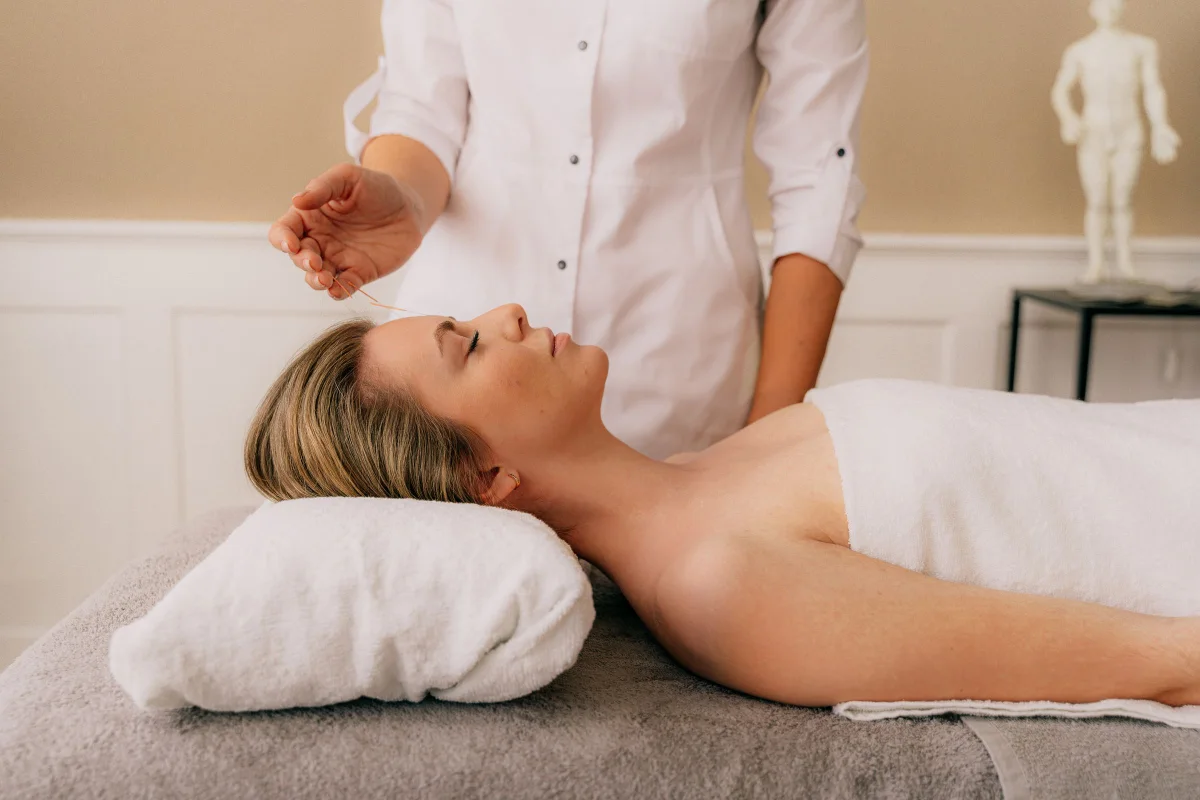
- We talk through your history. We ask when the sound started, what it sounds like, what makes it better or worse, and what your hearing tests have shown.
- We look at the bigger picture. We ask about your neck, jaw, sleep and stress, since these can affect how you experience the sound.
- We place the needles. Hair-thin, sterile, single-use needles usually rest for about 20 to 30 minutes while you relax. Many patients doze off.
- We make a plan. We agree on how often to come in and how we will measure change.

In the research, the most commonly used points were around the ear, combined with points farther away. Your acupuncturist may also add electro-acupuncture, which sends a gentle current through the needles and was used in several of the studies above.
How many sessions will you need?
It varies. The most common course in published studies was 10 to 19 sessions over 20 to 39 days, and the two trials above used 10 sessions over 5 weeks. Tinnitus that has lasted for years may be slower to change or may not change at all. We will review your progress with you, and if you are not seeing a difference after a fair trial, we will say so and talk about other options.
Tracking your progress
Tinnitus is hard to measure, so it helps to track it. Before you start, rate your loudness and how much it bothers you from 0 to 10, and note how you are sleeping. Compare those numbers every few visits. Your audiologist may also use a questionnaire called the Tinnitus Handicap Inventory, which is the same tool used in many of the studies.
Head, neck and jaw
Tinnitus from the neck or jaw
Some tinnitus is linked to the muscles and joints around the head. You may hear this called somatic or somatosensory tinnitus. The 2026 guideline added this topic for the first time and says clinicians may ask about it.
Signs that your neck or jaw may be involved:
- The sound changes when you clench your teeth, open your mouth or turn your head.
- It started around the time of a neck injury or dental work, or during a flare of jaw pain.
- You also have neck pain, headaches or TMJ symptoms.
- It gets worse with long hours at a desk or with jaw clenching.
Research here is early but worth knowing about. In a trial of 61 people with jaw-related tinnitus, adding hands-on therapy to exercise and education reduced tinnitus severity more than exercise and education alone. A 2026 trial of 31 people found something similar for neck and jaw-related tinnitus. A 2025 review suggests that neck and jaw exercises combined with hands-on therapy may help, and called for more studies.
Because TruSpine has acupuncturists and chiropractors on the same team, we can look at this side of things too. Depending on what we find, that could include Active Release Technique for tight muscles, dry needling, or neck and jaw exercises. These treat the neck or jaw problem, and they may not change your tinnitus.
San Francisco
Tinnitus care in San Francisco
At TruSpine, acupuncture for tinnitus is provided by our licensed acupuncturists Gabi Curbelo, MSOM, L.Ac. and Dr. Jennifer Drake, DACM, L.Ac.

Your first visit takes about 60 minutes, and treatment is included. Follow-up visits are 50 minutes. We work with many in-network and out-of-network plans, so call us before your visit and we will help you check your coverage.
Acupuncture is offered at our Telegraph Hill clinic at 150 Lombard Street, Suite 2, a short walk from North Beach, Jackson Square and the Financial District. No referral is needed.
FAQs
Common questions about tinnitus and acupuncture
What is tinnitus?
Tinnitus is hearing a sound that has no outside source. People describe ringing, buzzing, hissing, humming or clicking. It is a symptom rather than a disease, and it can be constant or come and go.
Can acupuncture help tinnitus?
It may help some people feel less bothered by it. Studies have reported improvements in tinnitus loudness and questionnaire scores. Results vary from person to person, and acupuncture is not a cure.
How many acupuncture sessions are needed for tinnitus?
There is no set number. A 2024 review of 106 studies found that 10 to 19 sessions over about three to six weeks was the most common course. We review your progress as you go, and if nothing has changed after a fair trial we will tell you.
Is tinnitus permanent?
Not always. It can fade on its own, especially when it follows loud noise or a treatable cause such as earwax. When it lasts, many people find that it bothers them less over time. There is currently no cure for long-lasting tinnitus, but it can be managed.
What is the best treatment for tinnitus?
That depends on the cause. For persistent, bothersome tinnitus, the 2026 US guideline recommends a full hearing evaluation, education, hearing aids if you have hearing difficulties, and cognitive behavioral therapy. Sound enrichment is an option.
Can a neck or jaw problem cause tinnitus?
Yes, in some people. This is called somatic or somatosensory tinnitus. A clue is that the sound changes when you move your jaw, head or neck, or when you press on tender muscles nearby.
Can stress make tinnitus worse?
Many people notice their tinnitus more when they are stressed, tired or anxious, and tinnitus can add to stress and poor sleep in turn. Working on sleep and stress will not remove the sound, but it may make it easier to live with.
Does acupuncture for tinnitus hurt?
Acupuncture needles are hair-thin, and most people feel little more than a brief tap or a dull ache. Tell your acupuncturist if anything feels uncomfortable and they will adjust the treatment.
Are there side effects?
Side effects are uncommon and are usually limited to a small bruise or brief soreness. Tell us if you are pregnant, take blood thinners, have a bleeding disorder or a pacemaker, or feel nervous about needles.
Should I see a doctor before trying acupuncture?
Yes. Start with your primary care doctor, an ENT or an audiologist so that your hearing is tested and treatable causes are ruled out. Acupuncture works alongside that care, not in place of it.
When is tinnitus an emergency?
Get emergency care if tinnitus comes on with sudden hearing loss, facial weakness or vertigo, or if it follows a head injury. If it beats in time with your pulse, ask for an urgent medical appointment.
Do you treat tinnitus in San Francisco?
Yes. Our licensed acupuncturists see patients with tinnitus at 150 Lombard Street, Suite 2 in Telegraph Hill. You can book online or call (415) 421-1115.
Research and sources
- Adams ME, et al. Clinical Practice Guideline: Tinnitus Update. Otolaryngol Head Neck Surg. 2026.
- Wu Q, et al. Efficacy and safety of acupuncture and moxibustion for primary tinnitus. Am J Otolaryngol. 2023.
- Liu F, et al. Acupuncture in the treatment of tinnitus. Eur Arch Otorhinolaryngol. 2016.
- Ho LF, et al. Electroacupuncture and warm needling for subjective tinnitus. Complement Ther Med. 2025.
- Lee KH, et al. Acupuncture for tinnitus: a scoping review of clinical studies. Complement Med Res. 2024.
- Tavares LF, et al. Manual therapy and exercise therapy on otological symptoms in temporomandibular disorders. Disabil Rehabil. 2025.
- Delgado de la Serna P, et al. Cervico-mandibular manual therapy and somatic tinnitus. Pain Med. 2020.
- Atan D, et al. Manual therapy in the treatment of somatic tinnitus. Physiother Theory Pract. 2026.
- Doi MY, et al. Effectiveness of acupuncture therapy as treatment for tinnitus. Braz J Otorhinolaryngol. 2016. Read the study
- National Institute on Deafness and Other Communication Disorders: Tinnitus
- NHS: Tinnitus
Medically reviewed by Dr. Supreet Shah, DC, MS, CCSP, chiropractor and founder of TruSpine San Francisco.
This article is for general information and is not medical advice. Individual results vary. If you have new tinnitus or changes in your hearing, get a professional evaluation.