Quick answer
The 6 steps for proper lifting
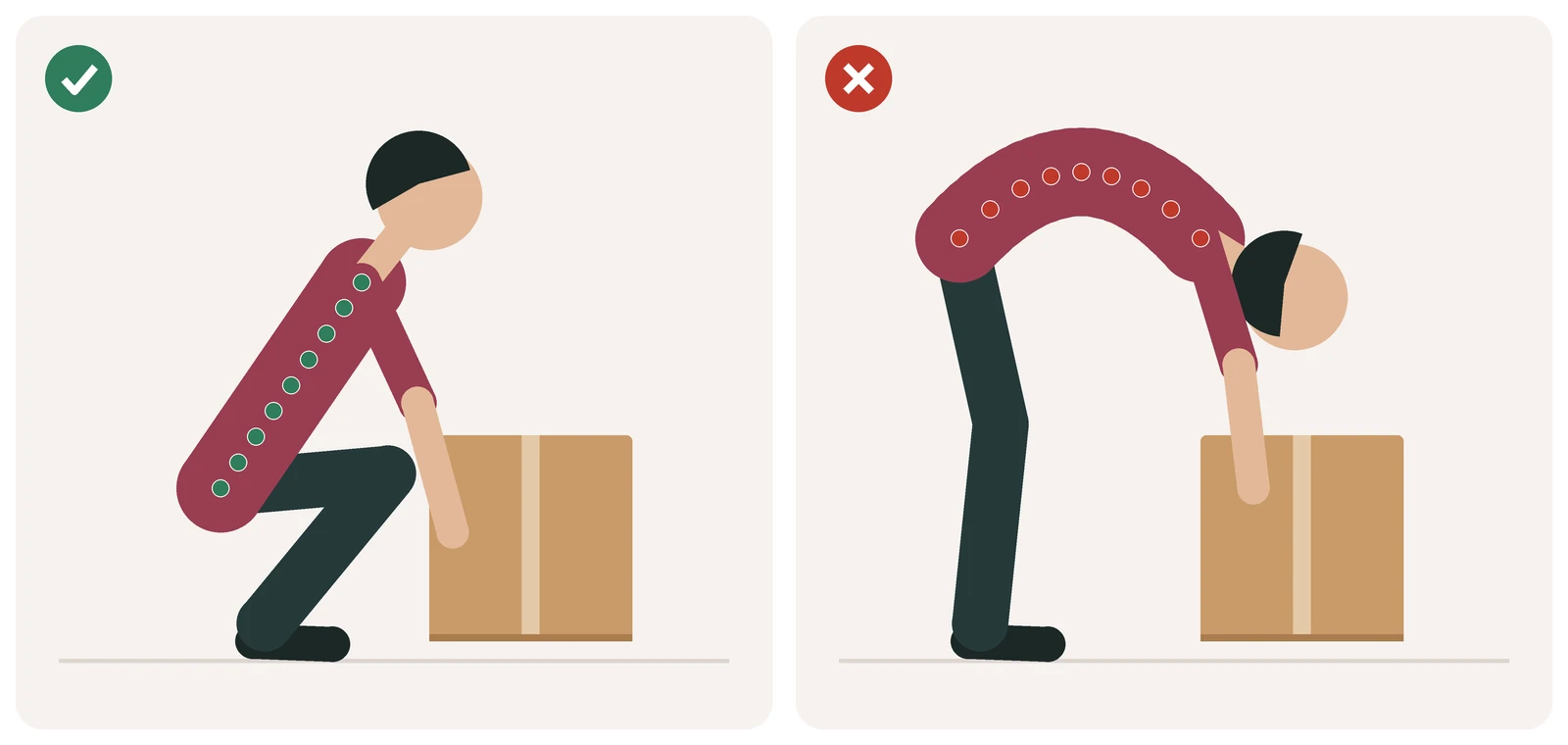
Proper lifting technique means keeping the load close, bending at your knees and hips instead of your waist, keeping your back straight, and letting your legs do the work.
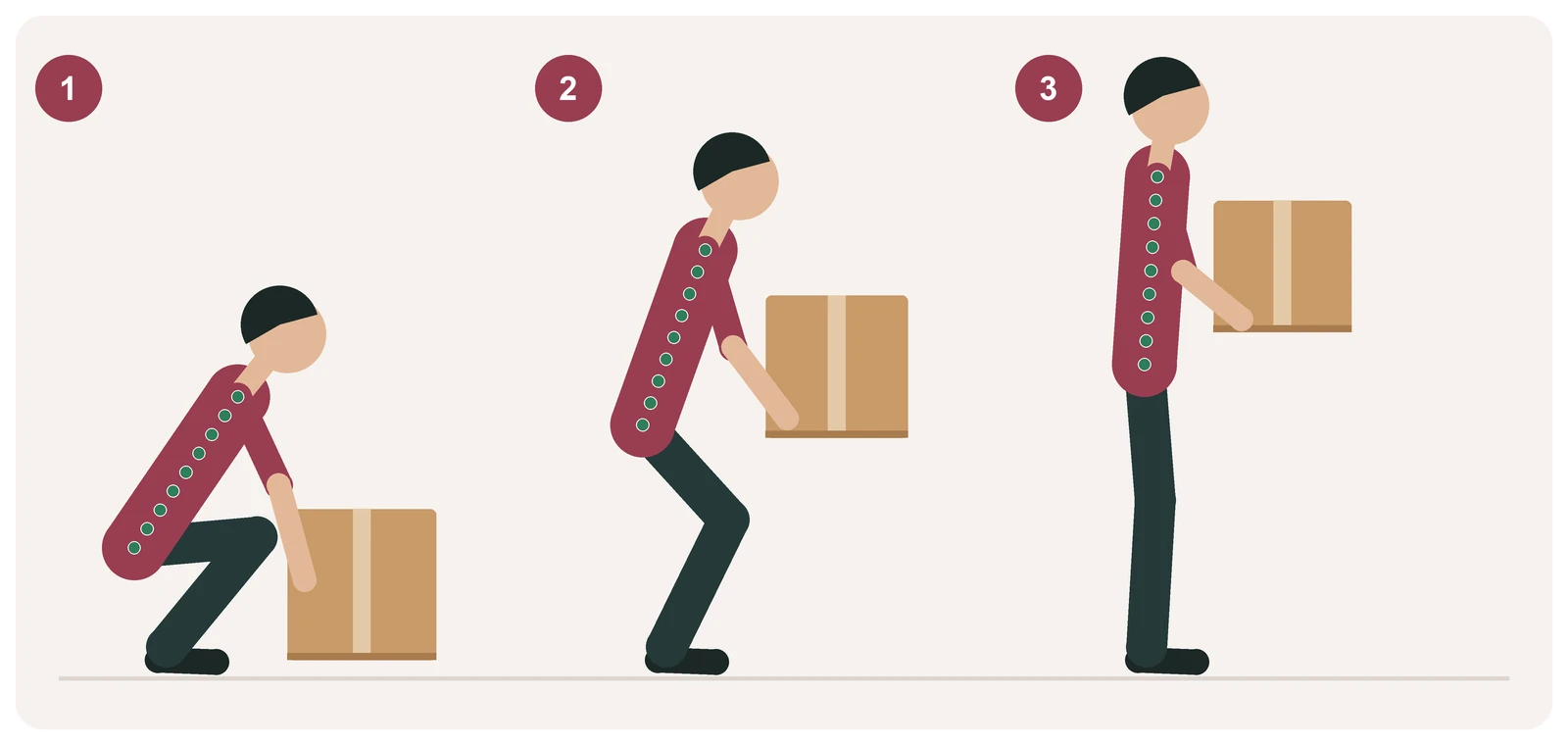
- Plan the lift. Check the weight and clear your path.
- Get close. Stand near the object with your feet shoulder-width apart.
- Bend your knees and hips. Squat down and keep your back straight.
- Brace. Grip with both hands and tighten your stomach muscles.
- Lift with your legs. Rise slowly, breathe out, and keep the load close to your body.
- Turn with your feet. Never twist your back. Squat to set the object down.
Bending at the waist does not prevent back strain. It is one of the most common causes of it. Squat with your knees and hips instead.
Why it matters
Why proper lifting techniques matter
Many people injure their backs while bending or lifting objects in the wrong way. A survey by the American Physical Therapy Association reports that nearly two-thirds of Americans experience low back pain, and nearly half of the cases are due to improper bending and lifting techniques.
As we get older, we are more likely to hurt our back while bending or lifting to put something up or down. The reason is that as we age our muscles and ligaments become less flexible. Past injuries of the muscles, ligaments or spinal disks also make us more prone to a back injury. Along with back pain, improper lifting technique can lead to arm pain and leg pain, and can cause acute injury with serious long-term effects.
The good thing is that these injuries are avoidable. All you need to do is learn and practice proper lifting and bending techniques.
The sad thing is that most people are aware of this, but rarely perform these techniques. They are ready to risk injury instead of taking the time to perform lifting activities properly.
The importance of safe lifting techniques cannot be understated, so here you will find essential tips to help you protect your spine from painful and unnecessary injuries.
The basics
What Is Safe Lifting and Bending?
Often, safe lifting emphasizes protecting the back. But the approach is more comprehensive and includes several main focuses.
Know your limit
First and foremost, be aware of your lifting limit and try to stay within it. To prevent injury, don’t lift items that are too heavy for you.
Protect your back
The next crucial component is protecting the back, or more precisely, the joints of the spine. Proper lifting techniques and strategies decrease the risk of injury.
Mind your knees and feet
Consider the strength, mobility and position of your knees and feet. Depending on the size and weight of the item, foot placement and knee and hip alignment should be taken into consideration.
Your limit
How Heavy Is Too Heavy?
It is important to know how much you can safely lift. No one can give you a precise weight, but think about how much you have lifted in the past and how easy or hard that was and you’ll have your answer.
Weight has a big impact on the risk of a back injury, but on its own it is not the whole story. Even if you don’t lift heavy objects, you can still get an injury. If you are not careful, you can strain your back lifting something as light as a pen.
According to the Center for Construction Research and Training, other factors that determine the risk include:
- How often you’re lifting something
- Bending and twisting while lifting
- Whether you hold an object away from you while lifting
- How high you’re lifting an object
- How long you lift or hold the object
Back belts do not decrease the risk of injury. Many people wear a back belt or back support when lifting, but according to research, back belts do not decrease the risk of a lifting injury, so they are not recommended. Instead of relying on a belt, use good lifting technique and only lift objects you would lift without one.
Quick reference
DOs and DON’Ts – Tips For Proper Lifting and Bending Techniques
DOs
- Keep your feet apart to give your body a wide base of support
- Stand as close as possible to the object you are lifting
- Hold the object as close as possible to your body
- Bend at your knees, not at your waist or back
- Lift slowly, using the muscles in your hips and knees
- Keep your shoulders in line with your hips
- To change direction, move your hips and shoulders in unison
- Tighten your stomach muscles as you lift the object up or lower it down
- Squat as you set the object down, using the muscles in your knees and hips and keeping your back straight
- Always use both hands
DON’Ts
- Do not bend at your waist. Squat instead, using the muscles in your knees and hips
- Do not bend forward as you stand up with the object
- Do not twist your back while you bend to reach the object, lift the object, or carry the object
- Avoid rapid twisting of the spine
- Do not hold your breath while you lift an object. Exhaling is the proper technique to use
- Do not use a partial grip on an object
- Do not obstruct your vision with the object you are carrying
Step by step
Correct Lifting Position and Technique
To properly perform lifting and bending techniques, try following these steps:
- Plan ahead before lifting. Knowing what you’re doing and where you’re going will prevent awkward movements while holding something heavy.
- Lift close to your body. You will be a more stable lifter if you hold the object as close to your body as possible.
- Keep your feet shoulder-width apart. This, along with taking short steps, gives you a solid base of support, which is very important while lifting.
- Bend your knees and hips and keep your back straight. Raise and lower yourself to the ground by bending your knees rather than bending at the waist.
- Tighten your stomach muscles. This helps you hold your back straight and prevents excessive force on the spine.
- Lift with your legs. This is one of the most important points. Don’t forget it.
- Look slightly upward. This helps you maintain a better position of the spine and keep your back straight.
- Don’t twist or bend. Turn your body as a whole. If you need to change direction, stop, turn in small steps, and then continue walking.
- If the object is too heavy, get help.
To find out if you are a victim of improper lifting and bending and get to the root cause of pain and discomfort, schedule an initial consultation, including a comprehensive evaluation and first treatment.
What goes wrong
Improper lifting: the three mistakes behind most injuries
Poor lifting posture usually comes down to one of three habits, and they often happen together.
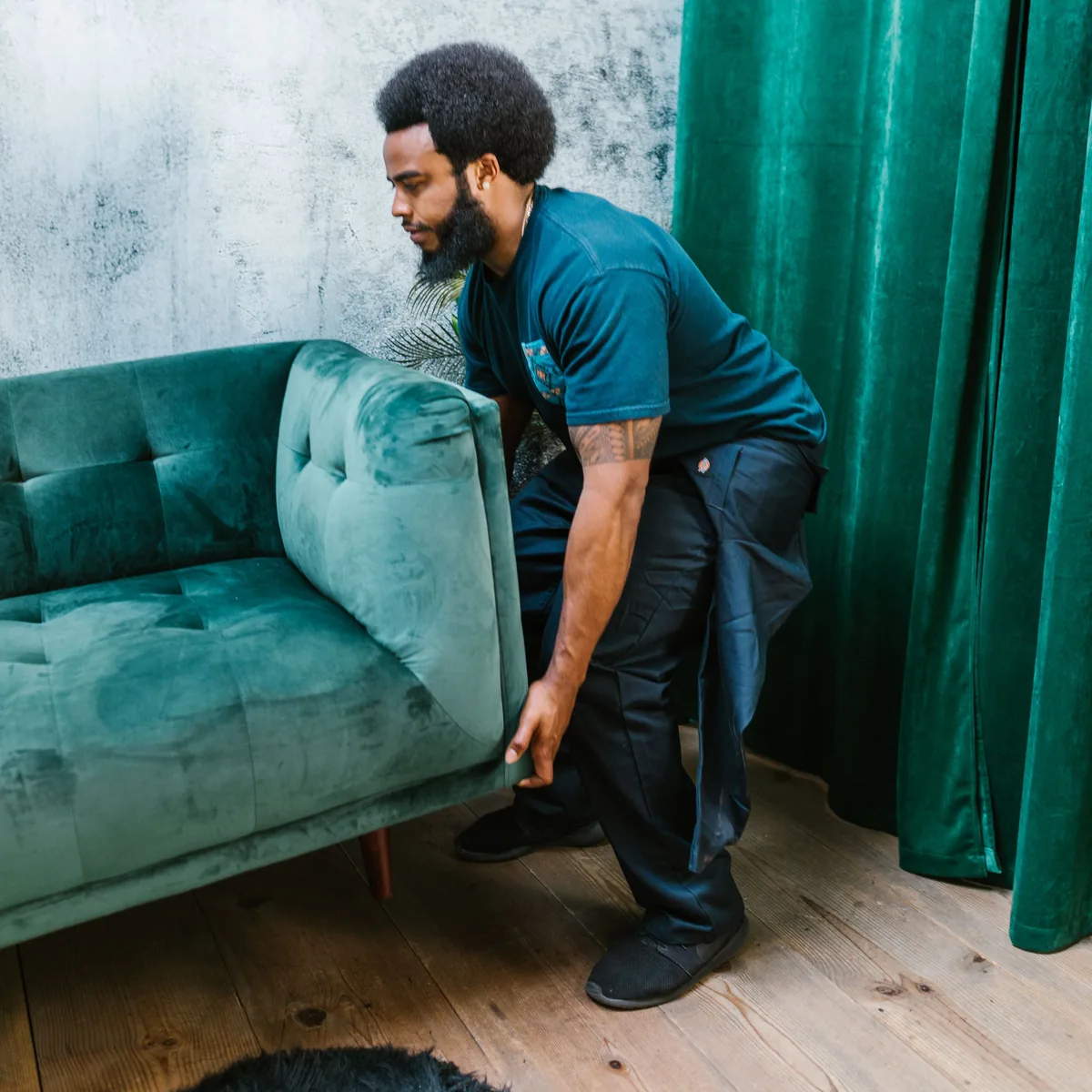
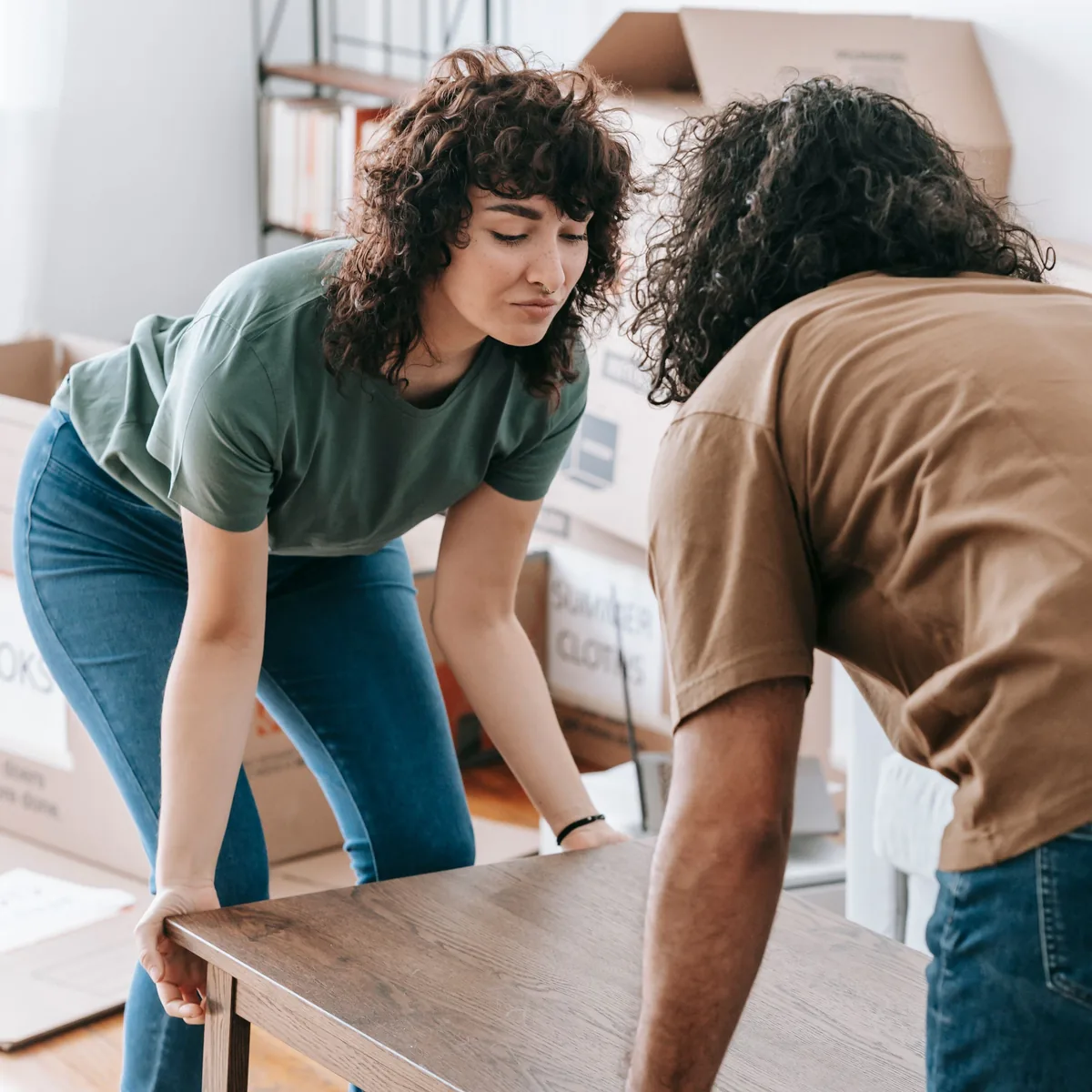
- Bending at the waist. Rounding forward with straight legs puts the load on your low back instead of your hips and thighs.
- Twisting while holding the load. Bending and twisting at the same time is especially hard on the discs in your low back. Move your feet instead.
- Holding the load away from your body. The farther an object is from your spine, the more force your low back has to resist. A light box at arm’s length can strain your back more than a heavier one held close.
What improper lifting can lead to
- Muscle strains and ligament sprains in the low back, the most common lifting injuries
- Bulging or herniated discs, especially with repeated bending and twisting
- Sciatica, pain that travels from the low back into the leg
- Neck, shoulder and arm strain from carrying loads away from the body
Match the lift to the load
Types of lifts and when to use them
Basic lifting techniques are not one size fits all. The right choice depends on the size, weight and position of the object.
Squat lift
Your go-to for heavier objects you can get close to. Feet wide, squat down, back straight, and lift with your legs.
Partial squat lift
For small, light objects with handles near knee height. Rest one hand on your thigh or a table for support and bend your knees and hips part of the way. Not for large objects.
Golfer’s lift
For very light items on the floor. Hold on to something stable, hinge at the hips, and let one leg extend straight behind you as a counterbalance.
Tripod lift
For moderately light objects without handles. Lower one knee to the floor beside the object, slide it up onto your thigh, hold it close, then stand.
Beyond the lift
How to bend and carry properly
Proper bending techniques
Back strain does not only come from heavy lifts. Small, repeated bends add up too. For everyday tasks like loading the dishwasher, gardening or tying your shoes:
- Hinge at your hips with soft knees and keep your back long
- Drop to one knee for low tasks instead of bending over
- Put one foot up on a step to tie your shoes
- Rest one hand on a counter or your thigh for support
Proper carrying techniques
- Hold the load between your waist and chest with your elbows close to your sides
- Take short steps and keep a clear view ahead
- Split heavy loads into two even loads, such as a bag in each hand
- Set the load down and rest before you get tired
- Use a cart or dolly whenever you can
- Use a step stool for anything above your shoulders instead of reaching
Lifting at home and at work
Moving day
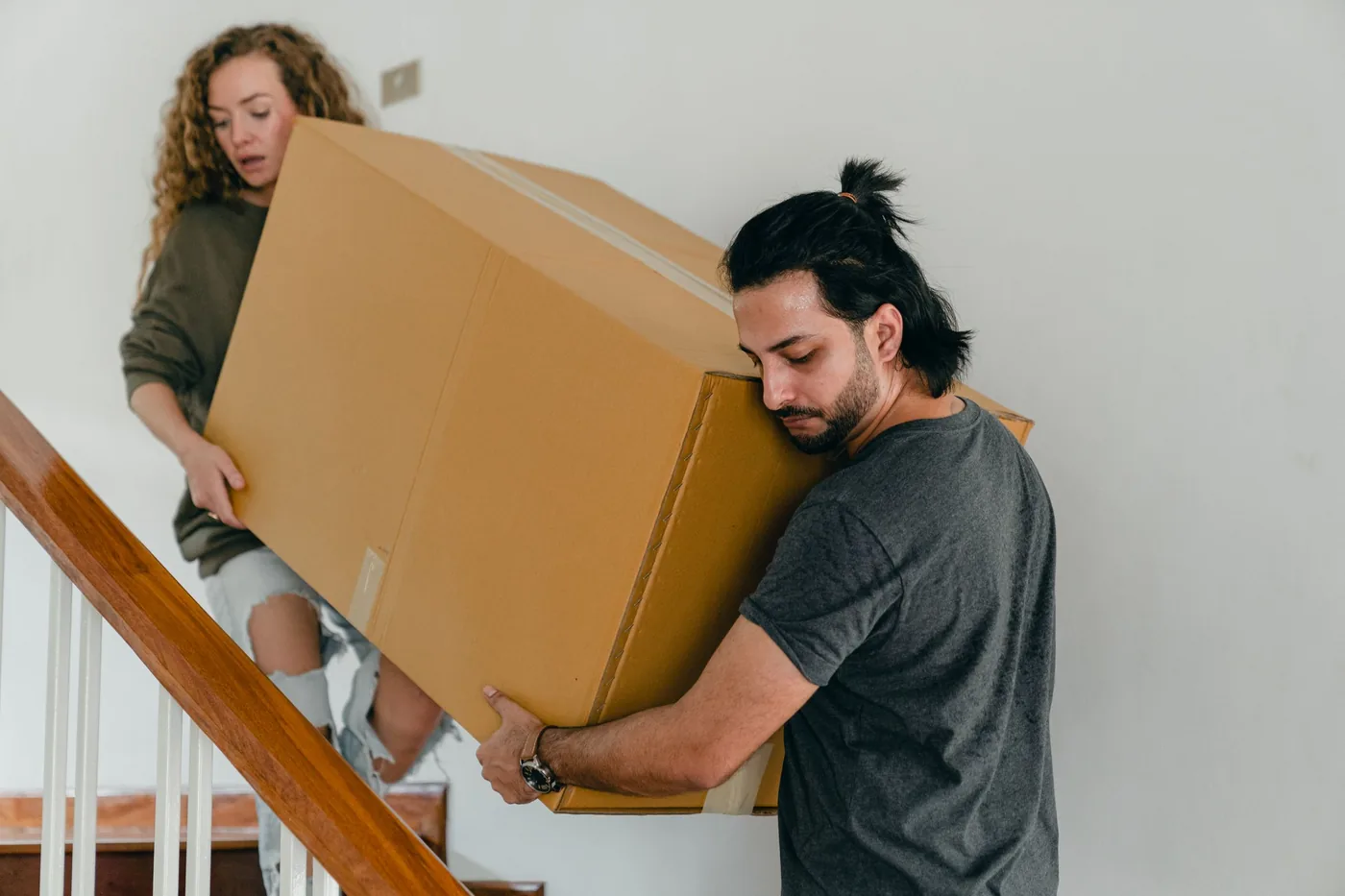
Pack smaller boxes, put heavy items in the smallest ones, and take breaks. Form slips when you are tired, so stop before you are worn out.
Kids and car seats
Squat down to pick up a child, and step close to the car rather than twisting in from the side.
Warehouse and delivery work
Store heavy items at waist height when you can, and use carts, pallet jacks and team lifts.
Lifting patients
Nurses and caregivers should use lift equipment, transfer aids and a second person whenever possible, and follow their facility’s safe patient handling training.
Prevention
Build the strength to lift safely
Good technique is easier when your legs, hips and core are strong. A few simple exercises, two or three times a week, can help you hold a safer position:
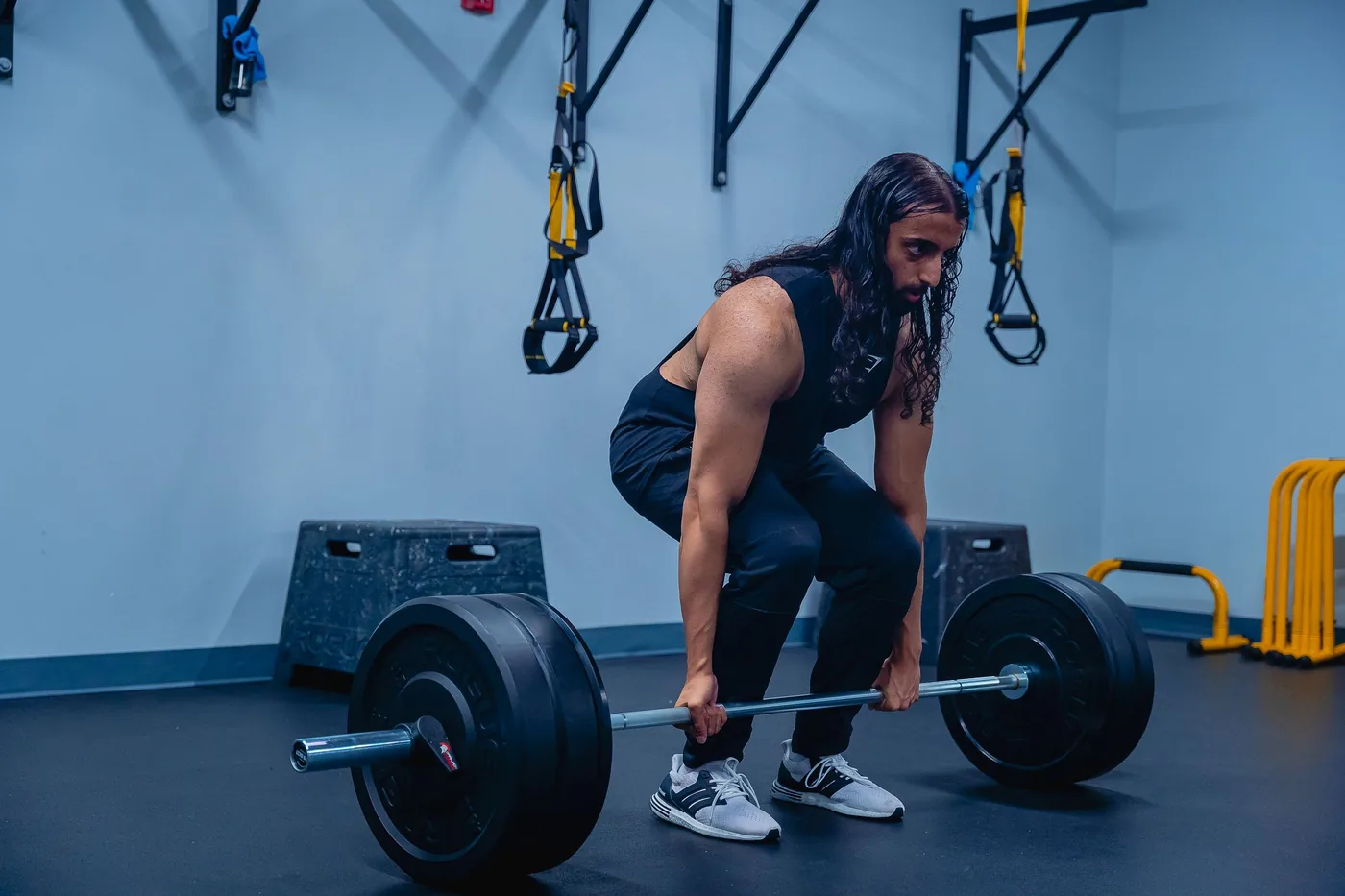
- Bodyweight squats to train your knees and hips to do the work
- Hip hinges to learn to bend without rounding your back
- Glute bridges to strengthen your hips
- Side planks and bird dogs to help your core support your spine
If any of these cause pain, stop and have it checked before you continue.
Already hurting?
Hurt Yourself Lifting in San Francisco?
Lifting injuries cluster in a few groups, and we see all of them: movers and warehouse staff, nurses and care workers lifting patients, parents of toddlers, and people who sit at a desk all week and then move apartments on a Saturday. The pattern is almost always the same. A back that has not been loaded in months gets asked to do something heavy in a single afternoon.
If you have already felt something go, do not wait it out. A strain treated in the first week is usually a far shorter problem than one you have spent a month compensating around, because the compensating is what turns a local injury into a pattern. Our back pain guide covers what is likely going on.
What to do if you felt something go
- Stop lifting for the day.
- Stay gently active. Short walks are usually better than bed rest.
- Use ice or heat, whichever feels better.
- Avoid the movement that hurt you until you have been checked.
Get emergency care if you have numbness in your groin or inner thighs, lose control of your bladder or bowels, or develop weakness in your legs.
We have two San Francisco clinics: North Waterfront at 50 Francisco Street, by the Embarcadero, and Telegraph Hill at 150 Lombard Street. No referral needed, and you can usually be seen the same week.
FAQs
Common questions about proper lifting
What is the proper lifting technique?
Stand close to the object with your feet shoulder-width apart, bend your knees and hips while keeping your back straight, tighten your stomach muscles, grip with both hands, and lift slowly with your legs while holding the object close to your body. Turn with your feet instead of twisting.
What are safe lifting techniques?
Know your limit, plan the lift, keep the load close, bend at the knees and hips, keep your back straight, avoid twisting, use both hands, and get help or use a cart when something is too heavy or awkward.
Should you bend at the waist when lifting?
No. Bending at the waist does not prevent back strain. It shifts the work onto your low back and is one of the most common causes of lifting injuries. Squat using your knees and hips instead.
Should your knees be bent when lifting an object?
Yes. Bend your knees and hips to lower yourself to the object, and straighten them to rise. This lets the large muscles of your legs and hips do the work. Bend your knees the same way when you lower an object.
What is the correct posture for lifting?
Feet shoulder-width apart, knees and hips bent, back straight, chest up, shoulders in line with your hips, eyes looking slightly upward, and the load held close to your body. The step by step guide above walks through each part.
What are the 6 steps for proper lifting?
Plan the lift, get close with your feet shoulder-width apart, bend your knees and hips, brace with both hands and your stomach muscles, lift with your legs while keeping the load close, and turn with your feet instead of your back.
Should you breathe out when lifting?
Yes. Do not hold your breath while you lift. Breathe out as you rise.
What is the partial squat lift used for?
Small, light objects with handles that sit around knee height. It is not meant for large objects. Use a full squat lift or a team lift for those.
Can improper lifting cause a herniated disc?
It can. Repeated bending and twisting under load stresses the discs in your low back, and a single bad lift can bring on symptoms in a disc that is already worn. Learn more about disc herniation treatment.
Do back belts prevent lifting injuries?
According to research, back belts do not decrease the risk of a lifting injury, and they are not recommended. Rely on good technique, and only lift objects you could lift without a belt.
How long does a lifting strain take to heal?
Many mild strains settle within a few days to a few weeks, but it varies from person to person. If your pain is not improving after a few days, or it travels down your leg, get it checked.
When is back pain after lifting an emergency?
Get emergency care if you have numbness in your groin or inner thighs, lose control of your bladder or bowels, or develop weakness in your legs. These symptoms need same-day medical attention.
Medically reviewed by Dr. Supreet Shah, DC, MS, CCSP, chiropractor and founder of TruSpine San Francisco.
This article is for general information and is not medical advice. Individual results vary. If you have a back injury or new symptoms, get a professional evaluation.