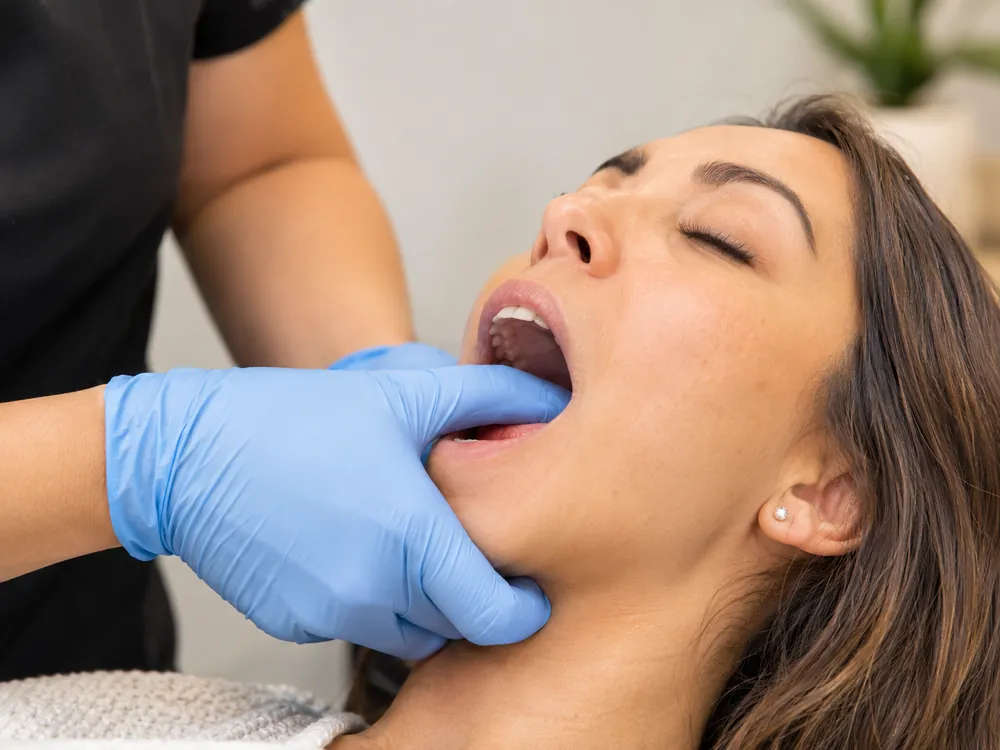
Can a chiropractor treat TMJ?
+
Yes, for the kind of TMJ problem that is driven by muscle tension and restricted joint movement, which is the majority of cases. Treatment involves hands on work to the chewing muscles, gentle mobilisation of the jaw joint, care for the neck and upper back, and a home exercise programme. It is not the answer for a cracked tooth, an abscess, a fracture or a bite problem that needs dental work, and we will tell you if that is what we find.
What kind of doctor should I see for TMJ in San Francisco?
+
There is no single TMJ specialty. If your pain is muscular, your opening is restricted, or your jaw symptoms come with neck pain and headaches, a chiropractor or physical therapist is a sensible first stop. If the problem is clearly dental, or you grind at night and need a guard, start with a dentist. For complex or long standing cases, an orofacial pain specialist is the right referral.
Should I see a dentist or a chiropractor for TMJ?
+
Often both, for different jobs. A dentist handles your teeth and your bite and makes the night guard that protects against grinding. A chiropractor treats the joint mechanics and the overworked muscles that produce the pain. Choose the dentist first if the trigger is clearly dental or you are grinding heavily at night, and the chiropractor first if the pain is muscular or travels into your neck and head.
How much does TMJ treatment cost in San Francisco?
+
It depends on your insurance and the care you need, so we check your benefits before your first visit rather than quote a number that turns out to be wrong. We work with many in network and out of network plans and offer payment plans. Call us on (415) 421-1115 and we will verify your coverage.
Is my jaw supposed to move side to side?
+
Yes. Side to side movement, called lateral excursion, is a normal part of chewing, and most adults manage around 8 to 12mm in each direction. What matters is whether it is even. Noticeably less movement one way, or a jaw that veers off centre and stays there, suggests one joint is not moving as it should.
Why does my jaw click or pop?
+
Clicking usually means the small disc inside the joint is slipping out of position and snapping back as you open. On its own, in a jaw that opens fully and does not hurt, it is common and often needs no treatment at all. Clicking that comes with pain, catching or restricted opening is worth having assessed, because it can progress to locking.
What should I do if my jaw locks?
+
If it is locked open or shut and you cannot move it, that is urgent and you should go to an emergency room or an oral surgeon the same day. If it catches intermittently but still releases, stop forcing it open, stay on soft food, apply heat, and get it looked at soon. Repeated locking tends to get worse rather than better when left alone.
Does acupuncture help TMJ?
+
It is a reasonable option for jaw and facial muscle pain, and the evidence for acupuncture in TMJ is modest but generally positive. We have licensed acupuncturists at our 150 Lombard Street clinic who treat jaw pain, often alongside hands on care rather than instead of it.
Does dry needling help jaw pain?
+
It can, for stubborn trigger points in the chewing muscles that have not responded to hands on work. A fine needle is placed into the tight band of muscle to release it. It is uncomfortable for a few seconds rather than painful, and we use it as part of a broader plan rather than on its own.
Do I need a night guard?
+
If you grind in your sleep, a guard is the standard way to protect your teeth from wear, and it often reduces morning jaw soreness. It does not stop the grinding itself, which is why muscle treatment and managing daytime clenching still matter. Night guards are made and fitted by a dentist, not by us.
Can TMJ cause headaches or ringing in the ears?
+
Yes to both. The temporalis muscle covers the side of the head, so when it is overworked the ache lands in the temples, which is why TMJ headaches are often mistaken for tension headaches. The joint also sits directly in front of the ear canal, so jaw problems commonly produce ear pain, fullness or ringing. Have the ear itself checked first, then look at the jaw.
How long does TMJ treatment take?
+
Many people notice a change within two to three weeks, with most conservative plans running six to eight weeks. Jaw problems that have been there for years, or that involve genuine joint damage, take longer. If eight weeks of consistent care has not shifted your symptoms, that is a signal to escalate to an orofacial pain specialist rather than keep going.